
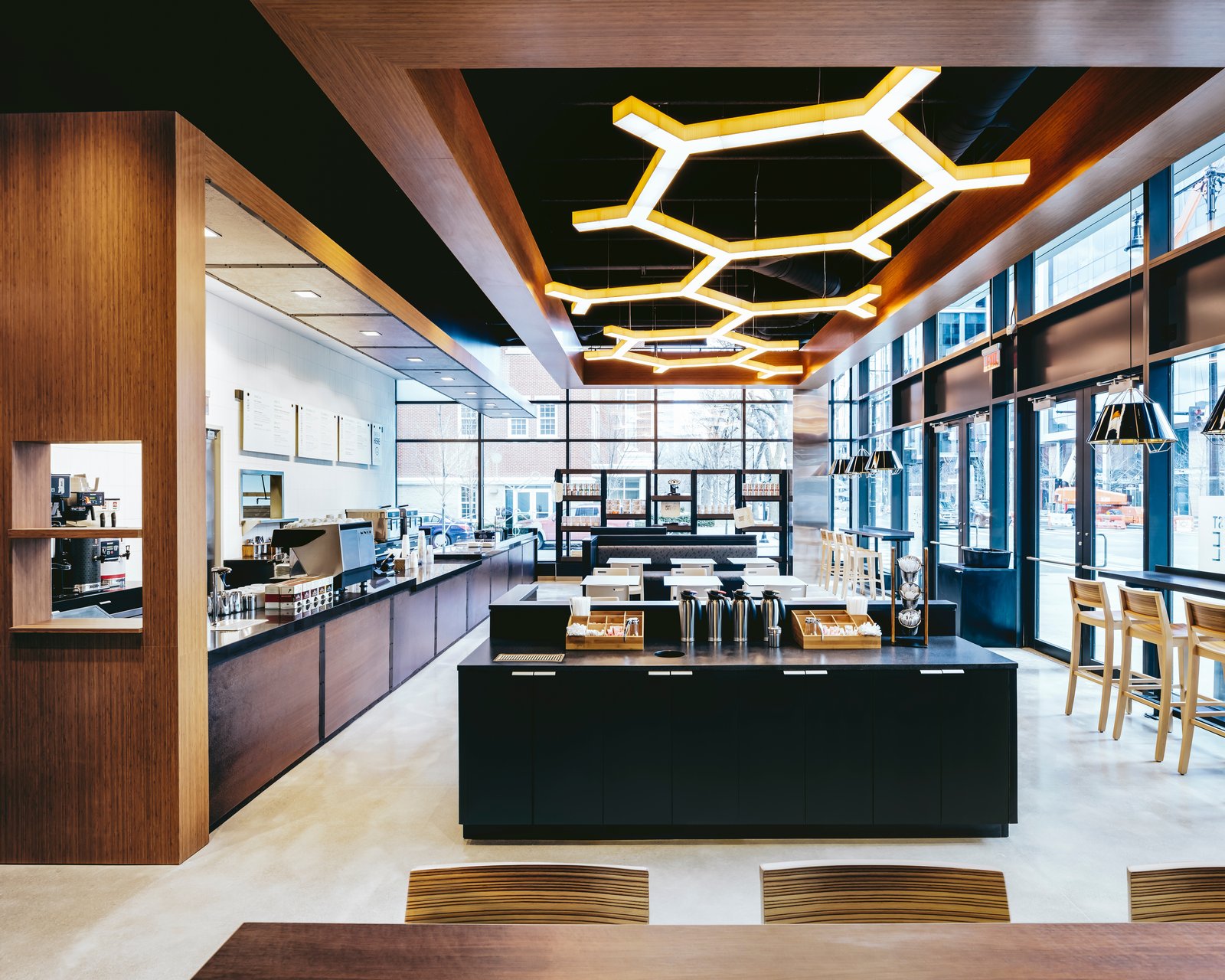
A grease interceptor, more than any dining room, determines whether a restaurant can open on schedule. Beneath the kitchen floor, the sizing of the interceptor, the slope of the waste lines and the location of floor sinks and drains decide what the plumbing inspector will accept, and getting them wrong means breaking a slab that has just been placed. We build restaurants for independent owners and hospitality groups in Santa Fe and across northern New Mexico, and we begin where the hard parts are: below the floor, above the ceiling and inside the walls, before we worry about the paint.
The diner sees a courtyard with a fireplace, a long bar with a timber back, a patio with a view of the evening sky. The owner sees an exhaust hood that must clear the roof, an electrical service large enough for a full line, a walk-in cooler and a dry storage room, and a staff entrance that is not the same as the guest entrance. A good restaurant is a balance between these two views, and our job is to give each its due.
Many of the best-loved restaurants in the region occupy buildings that were built for something else: a former house, a shop, an old hotel. Adapting them takes patience, a careful reading of the existing walls and a respect for the building's character, which is why our renovation and adaptive reuse experience is central to our restaurant work.
Kitchens, hoods and the places they must go
The kitchen drives the building. The hood and exhaust fan, the make-up air unit, the grease duct and the fire suppression system must be coordinated with the structure and the roof. In an older building, finding a path for a grease duct from the cooking line to the roof can take more thought than any other part of the design. We map the route on the drawings and confirm it with the mechanical contractor and the fire official before the hood is purchased.
Gas service, electrical capacity and water heating deserve the same early attention. A restaurant's demand can exceed what a small building was built to receive, and a utility upgrade may take months. We request load letters at the start of the project and carry the lead times in the schedule.
Plumbing, mechanical and the 2024 transition
Restaurants are plumbing and mechanical buildings. The state's Regulation and Licensing Department lists the 2024 New Mexico Plumbing Code and Mechanical Code as effective August 1, 2026, with permits under either the 2021 or 2024 edition until January 1, 2027, and only the 2024 edition afterward. For a restaurant, which has many fixtures, a large exhaust system and a lot of makeup air, the edition matters, so we confirm with the plans examiner which will govern.
The building also falls under the 2021 New Mexico Commercial Building Code and, in the city, the 2021 International Fire Code with Santa Fe amendments. In the historic district around the Plaza, exterior changes such as patios, signs, awnings and new openings are reviewed by the Historic Districts Review Board, so we prepare the submittal with photographs, samples and a clear drawing of what will be seen from the street.
Working to an opening date
Restaurants live on their opening day. Lease payments start, staff are hired and suppliers are lined up before the doors open, so delay is costly. We build the schedule backward from opening, with fixed points for kitchen equipment delivery, health department inspection, fire inspection and final occupancy. If one slips, we show the owner at once what it does to the others.
We keep a close relationship with the owner's chef or operations lead during construction. Small decisions, such as the height of a pass, the location of a hand sink or the swing of a door, are easy to correct on paper and hard to correct afterward. A short weekly walk with the person who will run the kitchen saves many arguments later.
Where restaurant money goes
Restaurant budgets are dominated by the kitchen and the finishes that guests touch. Hoods, fire suppression, refrigeration and the slab work for floor drains are expensive, and the dining room finishes, such as plaster, tile, custom millwork and lighting, create the atmosphere guests remember. We price each separately, so the owner can adjust one without disturbing the other.
In a tenant space, the landlord's allowance and the lease terms influence what is possible. In a new building, site work and parking may be the largest items, and a dining room inside a lodging project follows the program described in our hotel construction work. For restaurants in retail shopping centers, we coordinate with the center's rules for signage, trash enclosures and grease disposal.
Seasons, patios and the northern calendar
Patios are a major feature of dining here, and they depend on the seasons. A patio built into a historic building may need review and permitting separate from the interior, and its paving, walls and fire features take time. We ask owners early whether the patio is part of the opening plan or can follow later.
Remote locations add logistics. Dixon in the Embudo Valley has two wineries, and its fruit and grape growing makes the area a natural home for destination dining, while the galleries along the Turquoise Trail through Madrid draw visitors to a roadside setting. In such places, deliveries from the city and winter weather affect the calendar, and we plan around them.
Open on the day you promised
Tell us about the space, the menu and the opening you want. We will walk the site, look at the kitchen, and share an honest schedule and budget.
Questions Owners Ask
What should I check in a space before I lease it for a restaurant?
Look at the electrical service, gas supply, water line size, grease waste capacity, roof access for the hood and the existing floor drains. Ask whether the landlord will allow a grease interceptor and a hood penetration. We are happy to walk a space with you and give a quick, written read before you commit.
Do restaurants in the historic district face extra approvals?
For exterior changes, yes. Signs, awnings, patios and new openings are reviewed by the Historic Districts Review Board, which looks at harmony of style, form, color and material. Interior-only work is usually simpler, although the building and fire permits still apply.
How long does it take to build out a restaurant?
A buildout in an existing space can take a few months after permits, but the long items are usually the hood, the utility upgrade and the inspections. We map those at the beginning and confirm lead times before the owner commits to an opening date.
Can you work with my kitchen designer?
Yes. We prefer to meet the kitchen designer early and coordinate the equipment plan with plumbing, electrical, gas and mechanical. A shared coordination drawing keeps rough-in from drifting away from the equipment.
Which plumbing code applies to my permit?
Until January 1, 2027, permits can be issued under either the 2021 or 2024 New Mexico Plumbing Code, and only under the 2024 edition after that. We ask the plans examiner which edition applies to your submittal and plan the design accordingly.