
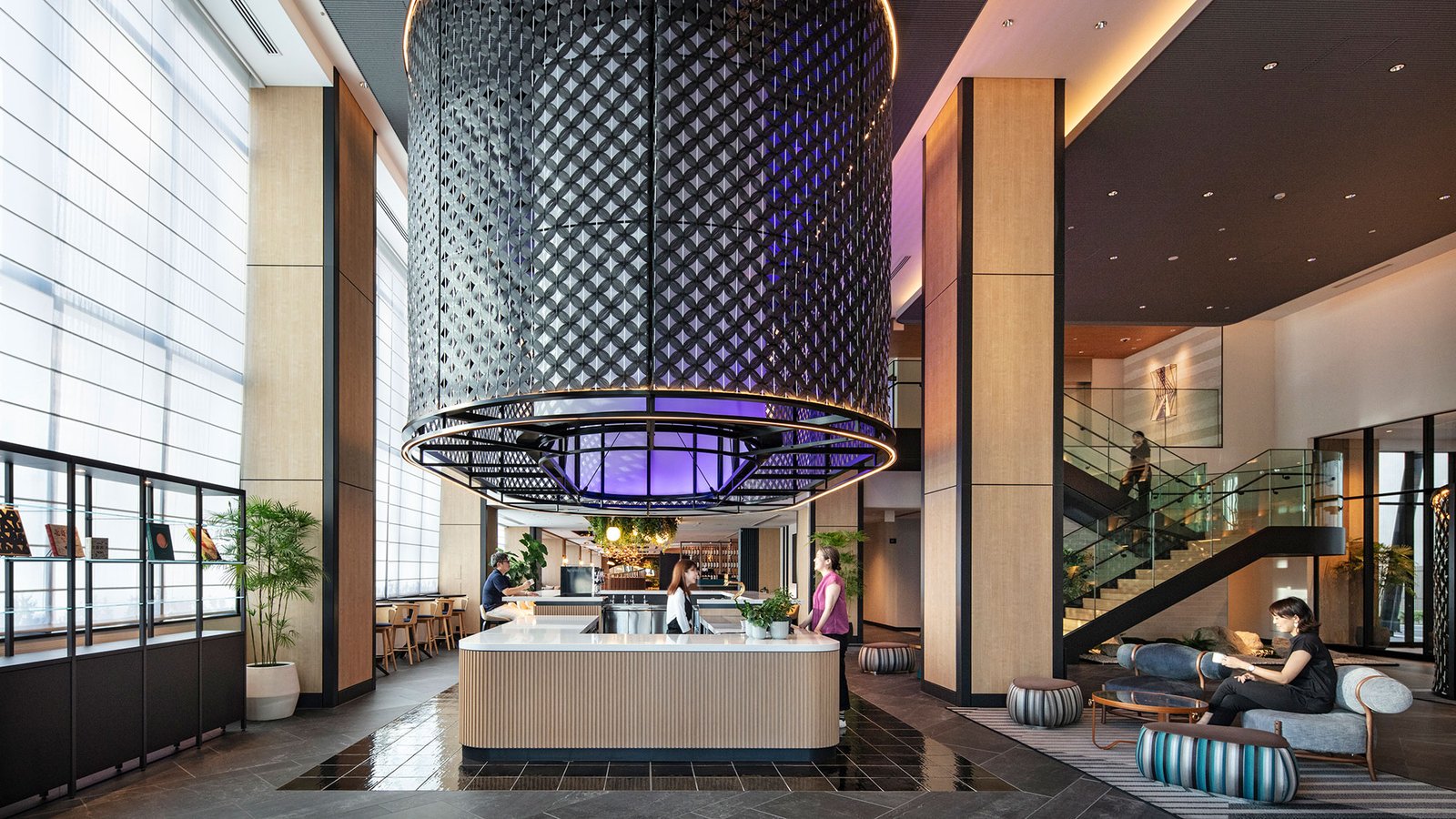
Hotel and Hospitality Construction in Northern New Mexico
Guests remember a courtyard fire, a carved door, the smell of piñon and the way afternoon light falls on a thick wall, and almost none of that appears on a typical hotel prototype. Hospitality construction in northern New Mexico asks a builder to deliver those details and also the ordinary demands of a lodging building: guest rooms that are quiet, plumbing that is reliable at scale, corridors that satisfy the fire code and back-of-house spaces that staff can work in all day. We build hotels, inns and resort additions that hold both halves together.
Leisure and hospitality account for about 10,900 jobs in Santa Fe, behind only state government and education and health services, and that weight shows in how seriously owners and the community take lodging. A new hotel is a long-term bet on the local visitor economy, and its design and construction are watched closely. We encourage owners to think of the review process as a way to learn what the city expects, not an obstacle, and we plan the schedule with that attitude.
The range of hospitality work here is wide: a limited-service hotel on a commercial corridor, an inn near the Plaza, a resort addition in the pueblo country north of town, or a small guest property built around a spring. Each calls for a different mixture of structure, finish and operational planning. We start with how the property will run and build outward from that, for instance by learning how hospitality groups staff, clean and service their rooms.
Where lodging is being built and why
Lodging growth in this region follows the visitor circuit. A hotel was announced in 2022 as part of the Santa Fe Place redevelopment along Cerrillos Road, which suggests how corridor sites are being used for visitor and business travelers. In the historic core, by contrast, the Historic District covers about 1,113 acres and the Plaza itself is a 2-acre National Historic Landmark, so new lodging there is a question of fitting into an existing fabric, and often of reusing buildings that are already there.
North of the city, Pojoaque is home to a resort and two other gaming properties run by the pueblo, described as a major regional employer. Buffalo Thunder Resort opened in 2008 against a 2004 estimated project cost of $250 million. That sort of project shows the scale at which hospitality can be built in Pojoaque and what it means for the surrounding economy and workforce.
What a hotel contract includes
A hospitality project involves more trades than almost any other building type. Structure, envelope, a large quantity of repeated rooms, commercial kitchens, public spaces, pools or spas, a lobby, meeting rooms and a service core must all be coordinated. We take responsibility for the sequence: the model room approved early, the repetitive floors released in bundles, and the public spaces finished with enough time to commission before opening.
Owner-supplied items, such as furniture, fixtures and equipment, need coordination too. We maintain a schedule that shows where the owner's purchases arrive, who installs them and when each room is ready for them. In the same way we coordinate the restaurant and bar spaces that most hotels include, since their kitchens determine much of the mechanical and plumbing design.
Review, codes and the character of the place
Hotels are among the most closely reviewed buildings. Inside a historic district, the Historic Districts Review Board considers harmony of style, form, color, height, proportion, texture and material, and may grant project-specific exceptions to height, design standards and signage. Visitors' first impression is the facade, so owners often discover that board comments improve the building, and we encourage a candid first meeting.
On the technical side, the project falls under the 2021 New Mexico Commercial Building Code and the 2021 Commercial Energy Conservation Code, and the plumbing and mechanical systems move to the 2024 editions on the state's transition schedule. Hotels carry a heavy load of hot water, ventilation and fire alarm devices, so we review those systems with the engineers early and confirm the code edition at permit.
Opening on a date that guests can book
A hotel opening date is a promise made to bookings, staff and lenders, and a late opening is expensive. We work backward from it. Long-lead items such as elevators, kitchen equipment, windows and doors are ordered early through long-lead procurement, rooms are finished floor by floor, and testing and training are given real time at the end instead of the leftover days.
Seasons influence the plan in this region. Exterior stucco and masonry are best placed in mild weather, while interior work can proceed through winter. Owners who open for a peak travel season should expect us to propose a calendar that finishes the exterior in the autumn before, and not one that squeezes it into the weeks ahead of opening.
What shapes a lodging budget
The biggest cost drivers are the number of rooms, the level of finish and the amount of public space and amenity. Rooms repeat, so a small saving in each, such as a simpler vanity or a more efficient bathroom layout, multiplies quickly. Public spaces and specialty features, such as a spa, a portal with timber posts or hand-finished plaster, carry cost out of proportion to their area but also create the character that guests pay for.
We help owners place their money where guests will notice it. That often means economical, durable rooms and generous, well-made entrances and gathering spaces. In a remote or rural site, the cost of bringing materials and crews also matters, and we include it plainly in the estimate.
Resorts, inns and springs beyond the city
Hospitality extends across the north. At Ojo Caliente, on US 285 roughly 50 miles north of Santa Fe, a hot springs resort has buildings and a 1924 Round Barn on the National Register of Historic Places, which shows the kind of heritage that can surround a lodging project. Ojo Caliente and similar places often need renovation or addition work inside historic fabric.
Taos, at an elevation of 6,969 feet, draws visitors by road and, from mid-2025, by year-round air service from its regional airport. Owners there ask about hotel buildings that can handle cold winters and strong visitor seasons. We explain how mountain snow loads, foundations and mechanical systems fit that setting.
Begin with the guest experience
Tell us about the property, the visitors you expect and the opening you hope for. We will describe the review path, the schedule and the cost drivers in plain terms and help you decide how to build it.
Questions Owners Ask
Can a new hotel be built in the historic district?
Yes, but it must show the historic styles and answer to the Historic Districts Review Board. Height above the underlying zoning needs an exception from that board and then a variance. Many projects in the core are renovations or additions to existing buildings, which can be easier to approve than all-new construction.
What delays most hotel openings?
Late deliveries of long-lead equipment and a compressed commissioning period. Elevators, kitchen equipment and life-safety systems all have lead times, and the final inspections depend on them. We order early and schedule testing as its own phase.
How do you protect quiet in guest rooms?
With demising walls built to a sound rating, resilient connections, isolated mechanical equipment and careful sealing at plumbing and electrical penetrations. We build and review a model room before the repeating floors are released.
Will altitude and cold weather affect the build?
Yes. Santa Fe and Taos sit high, so exterior work is scheduled around freezing temperatures, concrete needs cold-weather protection and mechanical systems are sized for the altitude. We plan the building envelope work for the mildest months where possible.
Do you work on resort additions as well as new hotels?
Yes. Additions to operating properties are among the more delicate jobs because guests are still there. We fence the work, route trucks away from guest areas, restrict noisy activities and coordinate every shutdown with the resort's management.