ABOUT US
About General Contractors of Santa Fe
On the evening a project goes before the Historic Districts Review Board, the drawings are no longer only ours or the architect's. They belong to a room of neighbors, commissioners and people who care a great deal about how the city looks a generation from now. We think of that evening as part of the job, and it shapes how General Contractors of Santa Fe approaches almost everything we build in northern New Mexico.
We are a general contractor for commercial, civic, hospitality and light industrial work in Santa Fe and the communities around it. We renovate old buildings with care, build new ones that belong beside them, and coordinate the reviews, clearances and inspections that stand between an idea and an occupied building. This page describes how we work and what you can expect, in the order we would explain it across a table.
The review is part of the work
Santa Fe asks something unusual of a builder. The city's historic district covers about 1,113 acres around the Plaza, and the ordinance that governs it states the purpose plainly: to continue construction of buildings in the historic styles, in harmony of style, form, color, height, proportion, texture and material. The Review Board can grant project-specific exceptions to height, design standards and signage, but it does so after hearing the case, not before.
We plan with that in mind. Before we price a building in or near the district, we read the standards that apply to the street. We note the rooflines, parapets, wall thicknesses, window proportions and stucco colors of the neighboring buildings. We ask the design team to show how a proposal fits those patterns, and we prepare the owner for questions the board is likely to ask. A hearing that goes well is rarely an accident. It is the result of drawings that were ready, materials that were chosen with care and an owner who knew what to expect.
For projects around the Plaza, our work in the Plaza and Historic District describes how the review calendar, the construction schedule and the budget fit together. Our broader permitting and entitlement support covers the same discipline for projects outside the district, where county and state reviews take the place of the board.
Ground that remembers
Northern New Mexico has been lived in for a very long time, and the ground often says so. Pueblo sites lie near the junction of Interstate 25 and US 285 in the Eldorado area. The Galisteo Basin holds the remains of abandoned villages. The Lamy area includes a group of fourteen pueblos dating to the years between 1200 and 1325. A trench dug carelessly in a place like that can end a schedule, and it can do harm that no schedule justifies.
We handle this by asking early. When a site is in or near a known area of cultural significance, we raise archaeological and cultural clearances during preconstruction, not after excavation starts. We coordinate surveys, monitoring and any consultation the owner's agency or the land status requires. We train crews on what to do if something unexpected turns up, and we agree on a stop-work protocol in advance. Owners find that a modest investment in early review saves the larger cost of a halted site.
Materials and hands
A building in this region is judged close up. The thickness of a wall, the shadow under a vigas-style beam, the texture of a plaster coat and the way a parapet turns a corner all register with the people who walk past. Pueblo Revival and territorial styles are built from details, and the details depend on trades that take time to do properly.
We work with masons, plasterers, carpenters and finish trades who understand these methods, and we leave room in the schedule for them. Stucco needs curing time, and every material needs a sample approved before the work goes in volume. We keep the approved sample on site as the standard.
The same attention carries over to renovation and adaptive reuse, which is a large share of what the city needs. Old buildings hold surprises behind plaster: failed beams, uneven foundations, buried utilities, and earlier repairs that were never recorded. We open the building carefully, document what we find, and bring the owner and the design team into the decision before the cost is committed.
Public owners and state work
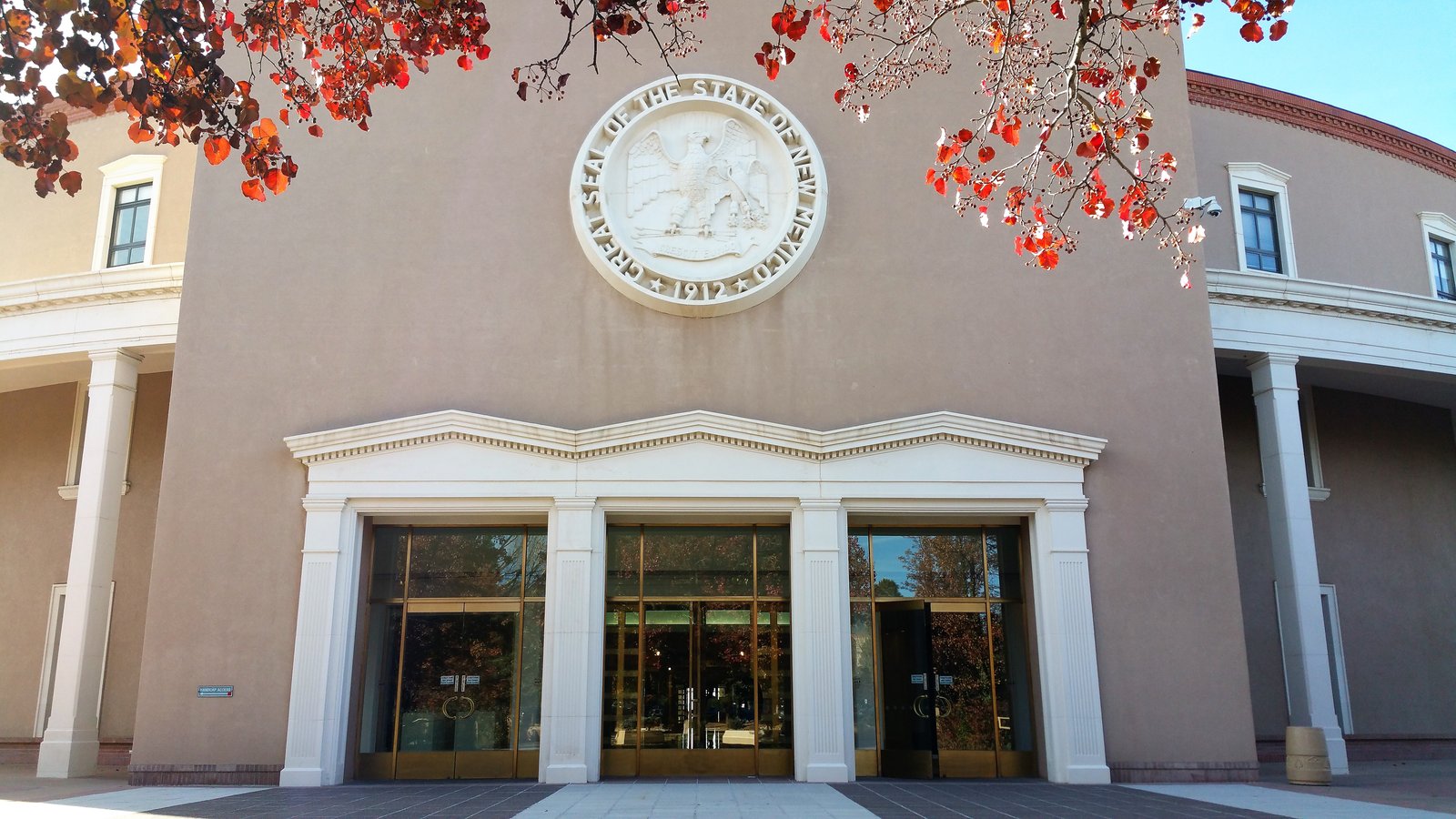
Santa Fe is the state capital, and a good deal of construction here serves public owners. The Roundhouse was dedicated in 1966 and is the only circular state capitol in the country. The Bataan Memorial Building, first completed in 1900, was remodeled in a Territorial Revival style in the early 1950s. Both belong to a complex of public buildings that has been updated over many years, and they show how much a civic building asks of its builder: accessibility, mechanical systems, security, long service life and a design that is respectful of what came before. Our page on the Capitol and Bataan complex speaks to that setting.
Public work follows its own rules. Procurement is formal, documentation is thorough and schedules are tied to appropriations. We are comfortable in that world. Our estimates are organized so that an agency can review them line by line, and our submittals are complete and organized. Owners who serve as state agencies and local governments can expect a team that treats the paperwork as seriously as the concrete.
Where we build
Our home market is the city itself, and within it we know several distinct settings.
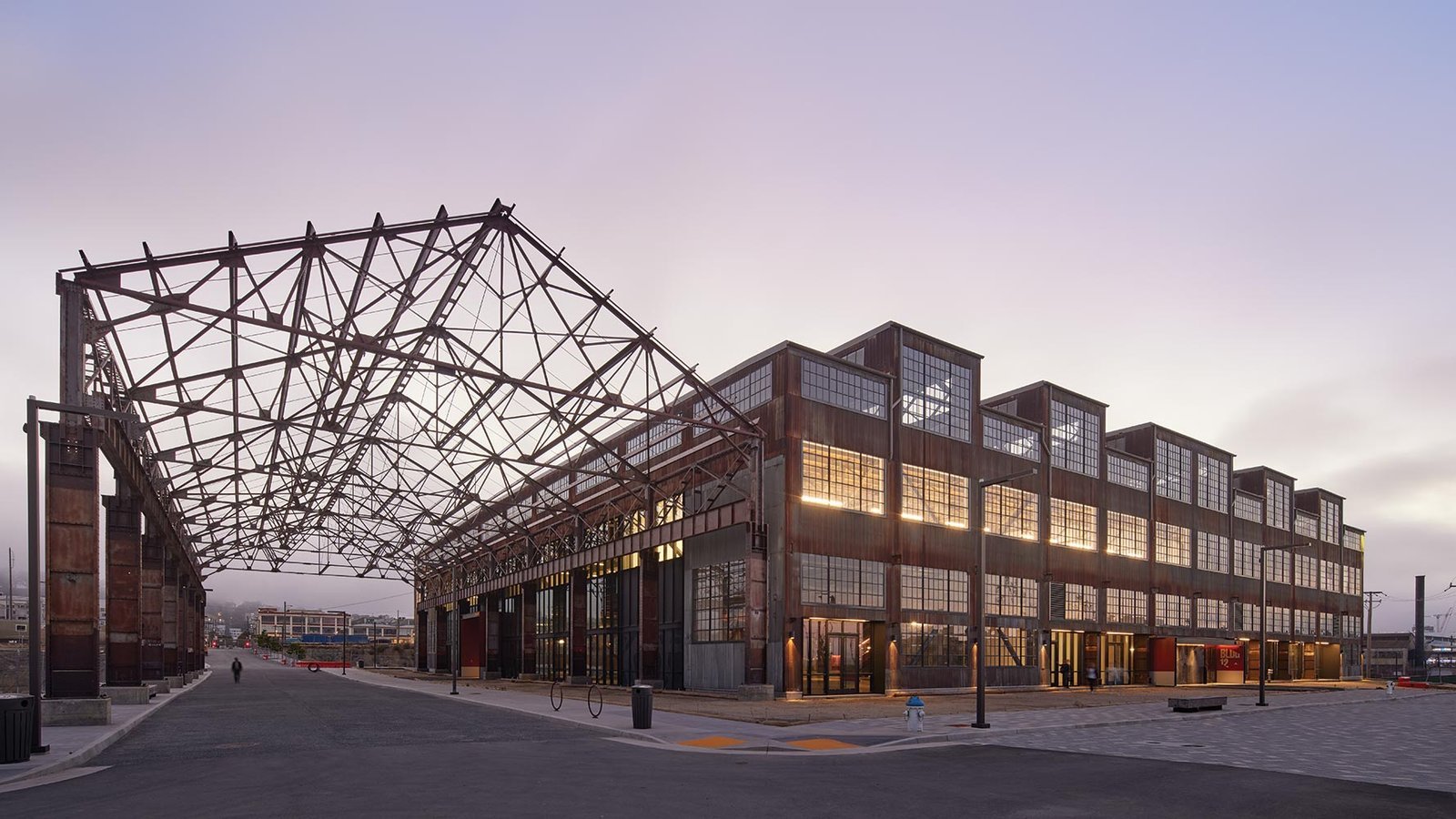
The Railyard is a 50-acre arts district with a park, a plaza, a farmers' market and a commuter rail station. It is a mix of older rail buildings and newer infill, and work there involves tight sites, public access and a lively neighbor base. Along Cerrillos Road and St. Francis Drive, the setting is retail, hotels, apartments and services, and a number of older centers are being rethought. The NM-599 bypass connects Interstate 25 to the airport area and opens land for light industrial and service uses. Near the airport, hangars, shops and flex space are the common requests. Our page on the Railyard district describes the first of these.
South of the city, the Community College District plan guides growth across about 17,000 acres, including Rancho Viejo and the campuses of the community college and the arts institute. North of the city lie the opera area, Pojoaque and Tesuque. These places combine pueblo lands, private land and county jurisdiction, so every project begins with a question about who has the authority to approve it.
Farther out, we work in Espanola, Los Alamos, Taos, Las Vegas, Pecos, Glorieta, Galisteo, Lamy, Cerrillos and Madrid, and in the High Road villages such as Chimayo, Truchas and Dixon. Distance and weather are real. Truchas sits at about 8,000 feet, and winter work there is not the same as winter work in town. Roads are narrow, suppliers are far apart and a delivery truck may need to come from Santa Fe. We build those realities into the schedule and the price, and we keep the owner informed about each delivery.
Hospitality is a natural part of this market. Inns, restaurants and small hotels often occupy older buildings with unusual layouts, and they often need to stay open as much as possible during construction. Our hospitality and hotel page describes the phasing and noise control that make that workable.
Water, weather and the arroyo
Santa Fe's dry climate hides a sharp truth: when rain arrives, it arrives fast. Arroyos run, parking lots flood and poorly graded sites send water straight toward doors. Freeze and thaw cycles work on masonry and pavement all winter. We take stormwater and drainage seriously at the start of a project, because a correctly graded site is the cheapest weather protection a building will ever get.
How a project runs with us
We keep our method simple and documented.
We begin by listening: who the owner is, what the building is for, who has authority over it, and which reviews it must pass. We then build a budget in stages, with allowances labeled and unknowns named. We schedule reviews, clearances and long-lead orders as real tasks, not as footnotes. During construction, a superintendent stays on the project, runs a weekly meeting and sends a written update. We manage safety through daily planning and regular inspection, and we expect every trade partner to do the same.
At the end, we complete the punch list, organize record documents, train the people who will operate the building and stay available. The goal is a building that the owner is proud to operate and the board is glad to see on the street. Our preconstruction and estimating work is where that goal begins, and we invite owners to come to us while the project is still an idea.
Do you handle Historic Districts Review Board submittals?
We support them. The design team prepares the drawings, and we contribute cost information, material samples, constructability review and the project calendar. We also help owners prepare for the questions a board is likely to ask.
What happens if archaeology is found on my site?
We raise the question during preconstruction, coordinate any required survey or monitoring, and agree on a stop-work protocol before excavation. If something unexpected appears, work stops in the affected area, the proper parties are notified and the schedule is adjusted.
Which building code applies in New Mexico?
The 2021 New Mexico Commercial Building Code, based on the 2021 International Building Code as amended, took effect July 14, 2023, with a matching energy conservation code effective in January 2024. We also check any local amendments.
Can you build in smaller communities outside Santa Fe?
Yes. We work in Espanola, Los Alamos, Taos, Las Vegas, Pecos and many smaller communities. We account for distance, weather and material delivery in the estimate.
Can work continue while my building stays open?
Often it can. We phase the work, protect occupied areas, schedule noisy tasks for agreed hours and keep clear paths for guests, staff and emergency access.