Construction for Logistics and Distribution Operators in Santa Fe
NM 599 meets I-25 at a diamond interchange at exit 276 on the border of La Cienega, rebuilt in 2009 from a partial cloverleaf, and the Santa Fe County/NM 599 Rail Runner station sits in the median of the interstate at that same interchange. For a distribution operator, that corner is the part of Santa Fe where trucks can come and go without crossing the historic city. Regional logistics in northern New Mexico is mostly about reaching customers across mountains and long distances, not about mega-warehouses.
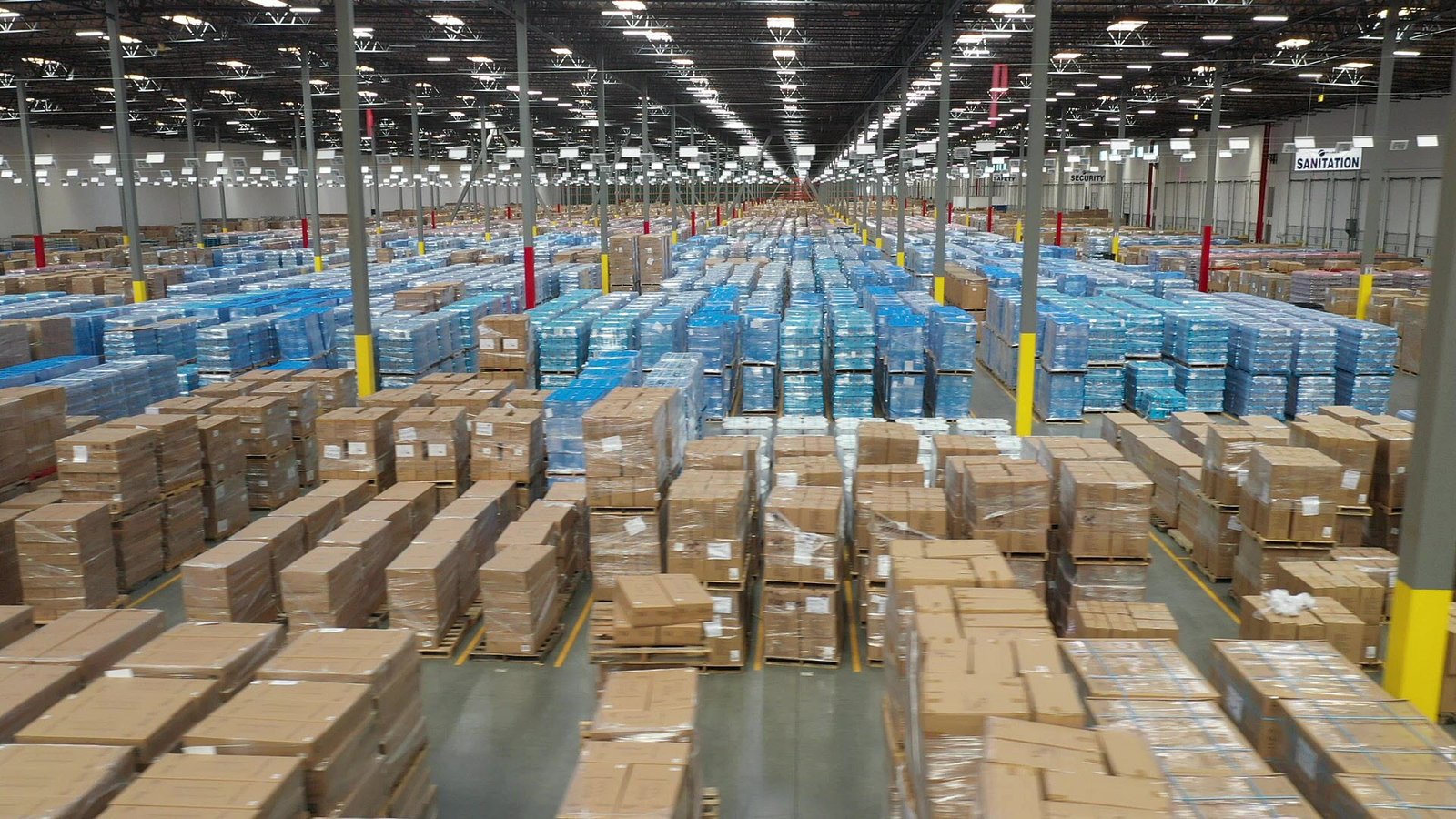
We build warehouses, cross-dock terminals and last-mile distribution buildings for operators who serve Santa Fe, Los Alamos, Espanola, Taos and Las Vegas. Our buildings are practical, with truck courts that turn, dock heights that match the fleet, and slabs designed for the racking and forklifts that will actually use them. We keep the design simple and the schedule firm.
Because these buildings sit near neighborhoods and highways, we also pay attention to lighting, screening and noise. A good distribution building here is one the neighbors rarely think about.
Corridors That Move Freight Here
Four corridors matter most. I-25 runs through Santa Fe and bypasses downtown Las Vegas, with I-40 about 55 miles south of Las Vegas via US 84. US 84 and US 285 follow St. Francis Drive through Santa Fe and merge with northbound I-25 on the south side at exit 282A, then run north to Pojoaque and Espanola as a limited-access freeway for part of the way. NM 599, the Santa Fe Relief Route, runs 14.019 miles from Cerrillos Road to a trumpet interchange with US 84/US 285, and its interchanges include Jaguar Drive, South Meadows Road, Camino La Tierra and Ridgetop Road. See our NM 599 bypass page for the sites along it.
Farther north, NM 68 runs 45.513 miles from Espanola along the Rio Grande to Taos and has very few passing opportunities between Velarde and Taos, which every dispatcher should know. Our Pojoaque and Las Vegas pages cover two other junction towns where distribution makes sense.
Rail, Air and the Last Mile
Rail freight is limited. The Santa Fe Southern Railway runs 18.1 miles of standard gauge track between Santa Fe and Lamy, where it connects to BNSF, though excursion service now uses it, and the BNSF line carrying Amtrak's Southwest Chief once daily each way through Glorieta carries very little freight as of 2025. Any plan for a rail-served building should be tested with the railroad before land is bought. Truck is still the dominant mode for goods in this part of the state.
Santa Fe Regional Airport, about 10 miles southwest of the city center, handled 402,000 total passengers in 2025, and its runways reach 8,366 feet. Air freight is minor, but the airport and its business park support aviation services and courier work. Last-mile operators prefer small-bay buildings close to customers, and our retail chain clients often rely on such buildings for e-commerce and store replenishment.
What We Build for Distribution Owners
The typical scope includes a shell of tilt-up concrete or pre-engineered steel, a slab with careful joint design, dock doors with levelers and seals, truck courts, trailer parking, office space and fire protection suited to the commodity. We discuss clear height, column spacing and floor loads with the operator early, because racking systems and automation change building requirements.
Smaller operators may need a cross-dock or a mixed warehouse and office building with a few dock positions. The warehouse construction and distribution center construction trade crews build both small-bay and larger formats, and the warehouse buildings page describes the options in detail.
Costs That Shape a Distribution Budget
In this region, site and utilities often outweigh the building. Sloping ground, arroyos, drainage and distance to power can raise early costs. Paving is another large item: truck courts and drive aisles must carry heavy loads, and base preparation matters more than surface thickness alone. We price paving and drainage clearly in our truck court and dock apron estimates.
Fire protection can also drive cost. Storage commodity, rack height and available water pressure determine the sprinkler system. If water supply is marginal, a fire pump and tank may be needed. We confirm with the fire department and water provider during planning so that the design is realistic.
Neighbors in the Supply Chain
Distribution buildings serve other segments. Local manufacturers need inbound materials and outbound shipping, retail operators need replenishment, and public agencies need warehouse space for supplies and records. Understanding those needs lets us design flexible space that can serve more than one customer.
We also work with owners who plan to lease to tenants they have not yet met. For them we design buildings that are generic enough to be useful and specific enough to be efficient: reasonable clear height, ample trailer parking and utilities sized for growth.
Put the Dock Where the Trucks Can Find It
Share the parcel, the product and the fleet. We will check access, utilities and drainage, and return a building concept and budget you can take to your lender or your tenants.
Questions Owners Ask
Where in the Santa Fe area is distribution land easiest to serve with trucks?
Sites near the NM 599 interchanges with I-25 and US 84/US 285 allow trucks to avoid the historic center, which is a large advantage. Airport Road reaches the airport from NM 599 at an at-grade intersection. Land use, zoning and utilities must still be confirmed parcel by parcel, and we help owners check those before they commit to a purchase.
Is a rail spur realistic for a new building here?
It may be, but rail freight is limited in this region and the line through Lamy carries very little freight today. We recommend speaking with the railroad before planning around a spur. For many operators, a truck-served building on a good highway interchange is a more dependable choice.
What clear height should a small regional distribution building have?
The answer depends on racking, product and automation. Many regional operators do well with moderate clear heights and well-planned racking, while larger tenants ask for more. Higher buildings need stronger fire protection and may draw more scrutiny from reviewers. We discuss the options with you early, since changing height after design is expensive.
How do winter and altitude affect a distribution build?
Cold nights can complicate concrete, so we protect slabs and use cold-weather methods. Elevation also affects mechanical equipment and heating loads. We plan the schedule to place critical concrete in favorable weather and keep winter work for interior tasks where possible.
How do you handle neighbors near a truck-heavy site?
We design truck routes to keep trailers off residential streets, add screening and shielded lighting, and plan hours of operation with the owner. During construction, we manage dust, noise and traffic with a plan shared with nearby owners. A short meeting early on usually prevents bigger problems later.