
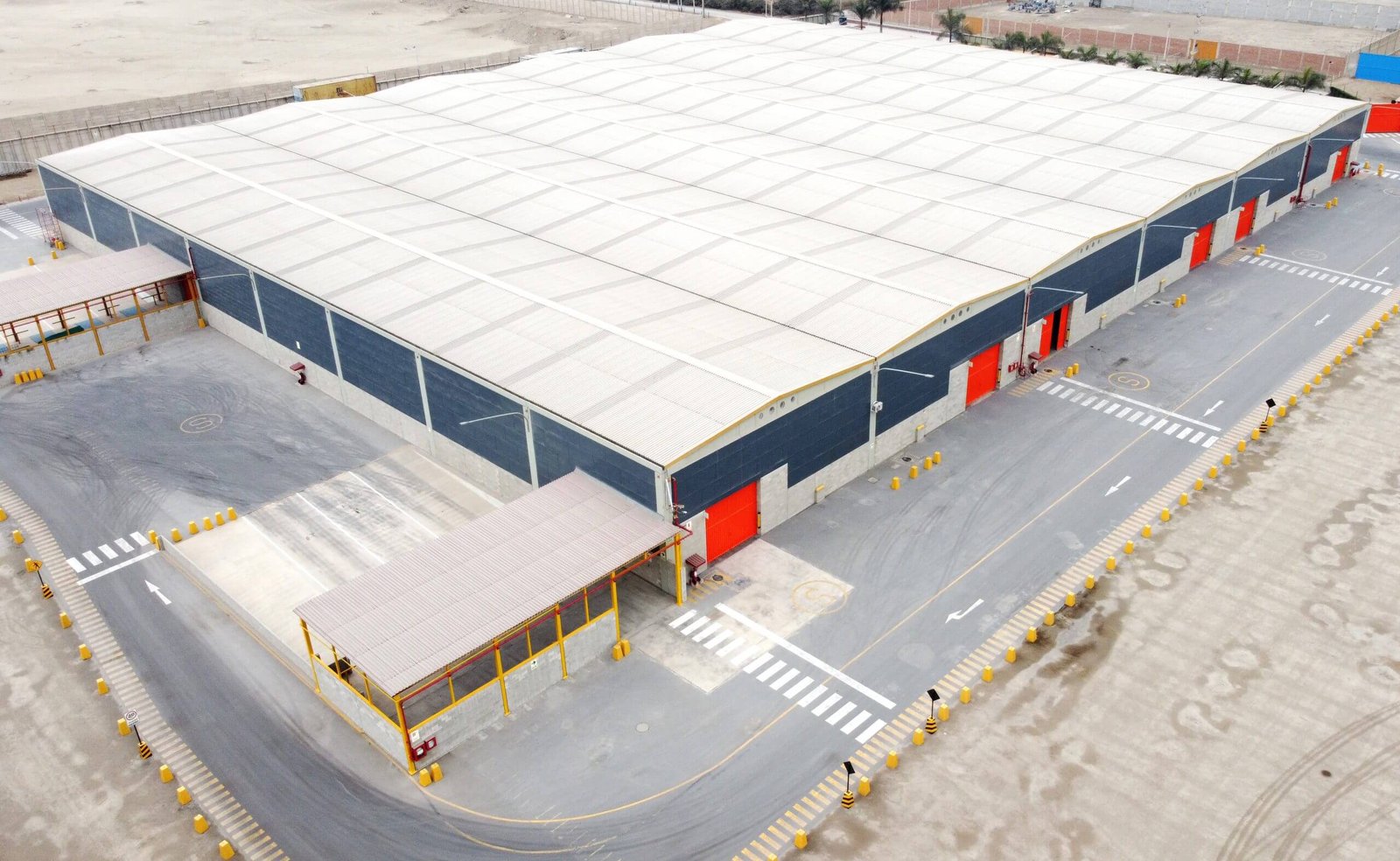
Dock doors, not square footage, decide how a distribution center performs. A building with too few doors, or doors that open onto a court too tight for a trailer to swing, will slow every shipment for as long as it operates. We build distribution centers for owners and operators who want the flow of freight settled on paper before the first footing is dug, and we treat the questions of approach, turning and staging as seriously as the structure.
Santa Fe is a small distribution market with an unusual set of constraints. Freight arrives by truck over I-25 and over US 84 and US 285, which pass downtown on St. Francis Drive and merge with northbound I-25 at exit 282A. The historic core is not a place for large buildings, so distribution land sits on the edges of the city, where the review is shorter but the ground, the grades and the neighbors still deserve attention.
We bring a quieter, more deliberate way of working to this building type. We will walk the parcel with your operations manager, count the doors you need, and explain each decision so that the finished building does what you asked of it. Those conversations often take place alongside the design phase, and they save more money than any single material substitution.
Why the edges of the city matter
NM 599 meets I-25 at a diamond interchange at exit 276, on the border of La Cienega, rebuilt from a partial cloverleaf in 2009. Further along, the Jaguar Drive interchange opened on November 18, 2015, and South Meadows Road is a dumbbell interchange. These are the places where a truck can leave the interstate and reach a loading dock in a few minutes, and an owner who can place a building within sight of one of them has a real advantage.
That advantage has to be weighed against what surrounds the site. Residential neighborhoods lie close to several interchanges, and trucks operating at night are a legitimate concern for them. We help owners think about the routing, lighting, screening and operating hours that make a distribution building a good neighbor. The same conversation often leads to a discussion of the NM 599 corridor and of sites further out on the I-25 line.
What a distribution center includes
The scope starts with the site: grading, stormwater, utilities, paving, and a truck court sized for the vehicles that will really use it. A heavy concrete apron at the docks, built under our supervision as part of truck courts and dock aprons, outlasts the building in many cases. Then the structure follows, usually tilt-wall panels or a steel frame with insulated panels, with a slab designed for racking and lift traffic.
Inside, the building needs sprinklers matched to storage height, dock equipment, lighting, ventilation, and an office and break room for the people who work there. Many owners ask for provisions for future racking, conveyor or automation, and we leave pits, conduits and floor tolerances ready for them. Where a tenant may later want cold space, the sibling subject of cold storage buildings is worth discussing before the slab is poured.
The work we manage most closely
A distribution center puts a great deal of work into concrete, and we keep as much of it as possible under close supervision. Foundations, slabs, paving and tilt-up panels are the elements that decide whether the building stays flat, dry and quiet under load. When we schedule, supervise and inspect that work directly, the team that manages the pour answers for it.
We also coordinate the specialty trades that finish the building: roofing, sprinklers, electrical, dock equipment and overhead doors. We schedule them in the order that lets the building close in before the weather turns, which at this elevation is a real consideration between autumn and spring. The result is a building delivered with a single point of accountability.
Sequence, lead times and the review calendar
The schedule for a distribution center is controlled by approvals and by materials. Site work and utilities can usually begin first, and the building permit follows. Equipment with long lead times, such as dock levelers, sprinkler pumps and electrical gear, should be released once the design is firm. Our long lead procurement process tracks these items from the first order through delivery.
A tenant who needs the building by a fixed date will do well to decide on racking and equipment early, because they affect the slab, the sprinkler design and the electrical load. We keep a short list of those decisions and press for them before they hold up a pour. When a change is unavoidable we price it and tell you its effect on the date before work resumes.
Yard safety, during construction and afterwards
A construction site that will become a busy truck yard has particular risks, and we plan them from the start. Separate gates for deliveries and workers, marked pedestrian routes, and a controlled lay-down area keep people clear of moving equipment. The same thinking carries into the finished building, with painted walkways, bollards, guarded dock edges and lighting that lets a driver see a person.
New Mexico's Construction Industries Division licenses contractors by classification, and the GB-98 General Building classification, under 14.6.6 NMAC, requires four years of foreman level experience, at least two of them commercial. That is a reminder that the person who supervises a project should know the work. Our superintendents are present on the site, not distant from it.
Services that pair with the building
Many owners ask for help beyond the shell. Our distribution center construction service covers the full delivery from design to turnover, and our work with logistics and fulfillment centers applies when the building is designed for e-commerce volumes rather than pallets.
Owners who plan to operate across the region often add a second building later. If you expect that, tell us now, and we will lay out utilities, the court and the stormwater so that the second building can be added without tearing up the first. Operators in logistics and distribution tend to appreciate that kind of planning.
Tell us about your freight
Describe the product you move, the trucks that carry it and the schedule you need to meet. We will sketch the dock and court layout with you, give you a candid view of the site, and build the schedule backward from your opening date.
Questions Owners Ask
How many dock doors do I need?
It depends on how many trucks you expect at the same hour, not on the size of the building. We count peak inbound and outbound trucks, add a margin, and set the doors to match. Adding doors after the building is complete is expensive, so we prefer to over-provide the wall and equip only the doors you need.
Where can a distribution center be located near Santa Fe?
Generally on the city's edges, close to the I-25 and NM 599 interchanges, and not in the historic districts. The right parcel has direct truck access, utilities within reach and zoning that allows distribution use. We will walk the site and give you our view before you commit.
Does the energy code affect a warehouse-style building?
Yes. The 2021 New Mexico Commercial Energy Conservation Code, which took effect January 30, 2024, governs envelope, lighting and mechanical efficiency, even in a largely unconditioned building. We incorporate it into the design from the beginning, so the insulation and lighting choices are made with the permit in mind.
Can a distribution center be built in phases?
Yes, and many are. We build the site, the utilities and the first building to your operating needs, and we leave the court, stormwater and electrical service sized for a future building. That keeps the first cost down without closing off expansion.