Construction in Cerrillos, New Mexico: Historic Lots on the Turquoise Trail
Ground that Ancestral Puebloans began mining for turquoise around 700 to 900 AD deserves a careful look before a footing is poured, and that care is how we approach Cerrillos. We build and renovate small commercial, hospitality and community buildings here, with the history of the land and its buildings treated as part of the scope.
Cerrillos sits at 5,758 feet with 258 residents in the 2020 census. State Highway 14, the Turquoise Trail, provides access to the town and continues south to Albuquerque. The Atchison, Topeka and Santa Fe Railway connected Cerrillos Station on February 15, 1880, and by 1880 the five mining camps held roughly 1,200 to 1,500 people. A town with that past has old foundations, old lots and old walls, and an owner who buys one of them needs a contractor who can read what is already there.
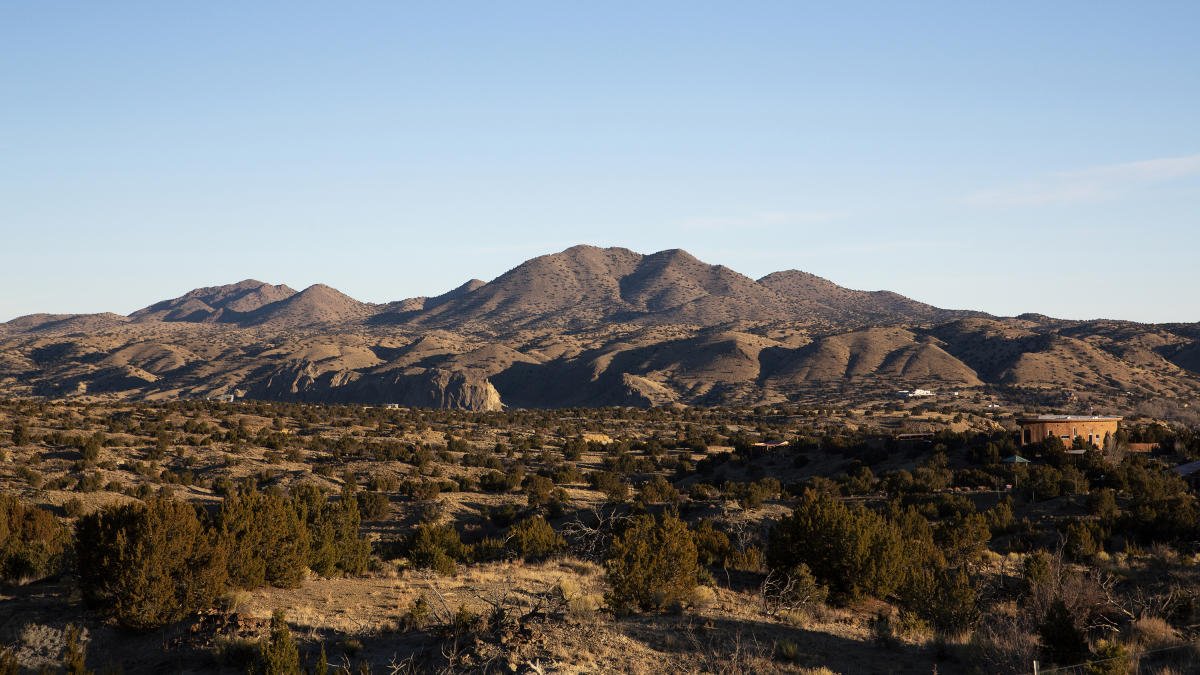
Santa Fe County bought 1,116 acres of the Cerrillos Hills in January 2000, and the park was renamed Cerrillos Hills State Park in 2009. Public land beside private parcels brings trail users, rules about runoff and views, and neighbors who care. We plan with all of them in mind.
Reading the lot before we draw on it
We begin with a record of what is on the parcel: old foundations, cellars, fill, utilities, wells, trees and walls. We photograph and measure what we find and share it with the architect so the design can build on it instead of fighting it. In a former mining district, ground can hide shafts, tailings or buried debris, and we recommend a geotechnical report and an environmental screening before purchase.
We then agree on a conservative approach to existing buildings. Adobe and stone walls repaired with the wrong mortar or plaster can fail, and we involve masons who know compatible materials. Where a building is in poor condition, we explain which parts can be saved and which cannot.
Clearances and codes
Some Cerrillos parcels may call for archaeological clearance or review because of the area's long mining and settlement history. We recommend that the owner ask early, and our permitting and entitlements support places the clearance on the schedule ahead of excavation. If artifacts or features appear during construction, we stop work in the area and notify the proper authorities.
Where state codes govern the building, the 2021 New Mexico Commercial Building Code adopts the 2021 International Building Code as amended and took effect July 14, 2023, and the Regulation and Licensing Department's code page also lists the 2021 New Mexico Existing Building Code. For older structures the existing building code is often the more useful reference, and we ask the design team to confirm which sections govern the alteration.
Small buildings with a long memory
Typical projects are adaptive reuse of older commercial buildings, lodging and food service, workshops and studios, community buildings and new small structures that respect the scale of the street. Our renovation and adaptive reuse group prepares condition surveys, structural repair plans and phased schedules for such work.
Visitors arrive along the Turquoise Trail, so owners often pair a building project with parking, access and signage. Our parking lot construction scope covers grading, drainage, base and paving suitable for small lots, and we coordinate it with landscaping and lighting. Outdoor seating, patios and walkways are other common additions, and we build them so that water drains away from old walls.
Crafts we manage closely
Small historic projects benefit from a team that manages much of the work directly. We schedule and supervise the trade partners for masonry repair, framing, finish carpentry, concrete and site work, and we coordinate plaster, roofing and specialty trades under one superintendent. In a town of 258 residents, where specialty trades may travel some distance, that continuity saves time and protects quality.
Our concrete foundations team also manages underpinning and new footings beside old walls, working in short sections to protect adjacent structures. Old foundations rarely sit at the same depth along their length, and we follow the conditions we find rather than the ones we hoped for.
Working beside neighbors and public land
Cerrillos has few streets and many close neighbors. Trucks, dust and noise reach the next building quickly, so we set work hours, protect adjoining properties and agree on delivery routes with the owner and neighbors before work begins. Neighbors receive a short notice before each major activity such as a concrete pour or a large delivery. We also keep construction away from trails and public land, and prevent runoff from leaving the site.
Water is often the hidden constraint. Many older lots depend on wells and septic systems, and capacity, setbacks and approvals limit what the building can contain. Hospitality owners should ask about this first, because the number of rooms or seats the site can support defines the business.
Reaching the Turquoise Trail
We reach Cerrillos from Santa Fe along State Highway 14, the Turquoise Trail, and we serve the communities along it. We plan deliveries with suppliers around the road, weather and travel time. For larger projects we may rent a small staging area nearby, so tools and materials stay close to the work.
Neighboring Madrid and Galisteo share some of the same conditions, and owners with property in more than one of them can ask us to plan the work together. Shared mobilization lowers cost, and shared knowledge of the soil, water and review lowers risk.
Begin a Cerrillos project
Tell us about the lot, its buildings and what you want them to become. We will visit, review what records exist and propose a first set of questions, and a path for survey, review and construction.
Questions Owners Ask
Is an archaeological clearance needed for a Cerrillos lot?
It may be, depending on the parcel, its ownership and any permits or funding involved. We cannot say in advance, so we recommend asking the responsible agencies early and, if required, engaging a qualified professional. The clearance is then scheduled ahead of excavation.
Can you repair adobe and stone walls?
Yes, using compatible materials and methods. Cement-heavy mortars and plasters can trap moisture and damage soft masonry, so we use lime or earth-based materials where appropriate. We start by finding out why the wall is failing, since the cause is often water at the base or roof.
What should we know about buying an old lot?
Ask for a survey, a geotechnical report, an environmental screening, and records of wells, septic systems and past approvals. In a former mining district, the ground may conceal features that affect cost. We can help review those documents before you commit.
Which building code applies to an old building?
The State code applies where the state has jurisdiction, and for alterations the design team may use the existing building code. The 2021 New Mexico Existing Building Code appears on the Regulation and Licensing Department's code page. We ask the architect to identify the governing sections early.
Can small hospitality projects work in a town this size?
They can, within the limits of water, wastewater and parking. We help owners test the program against what the site can support before the design is far along. That avoids drawing a building the site cannot serve.