
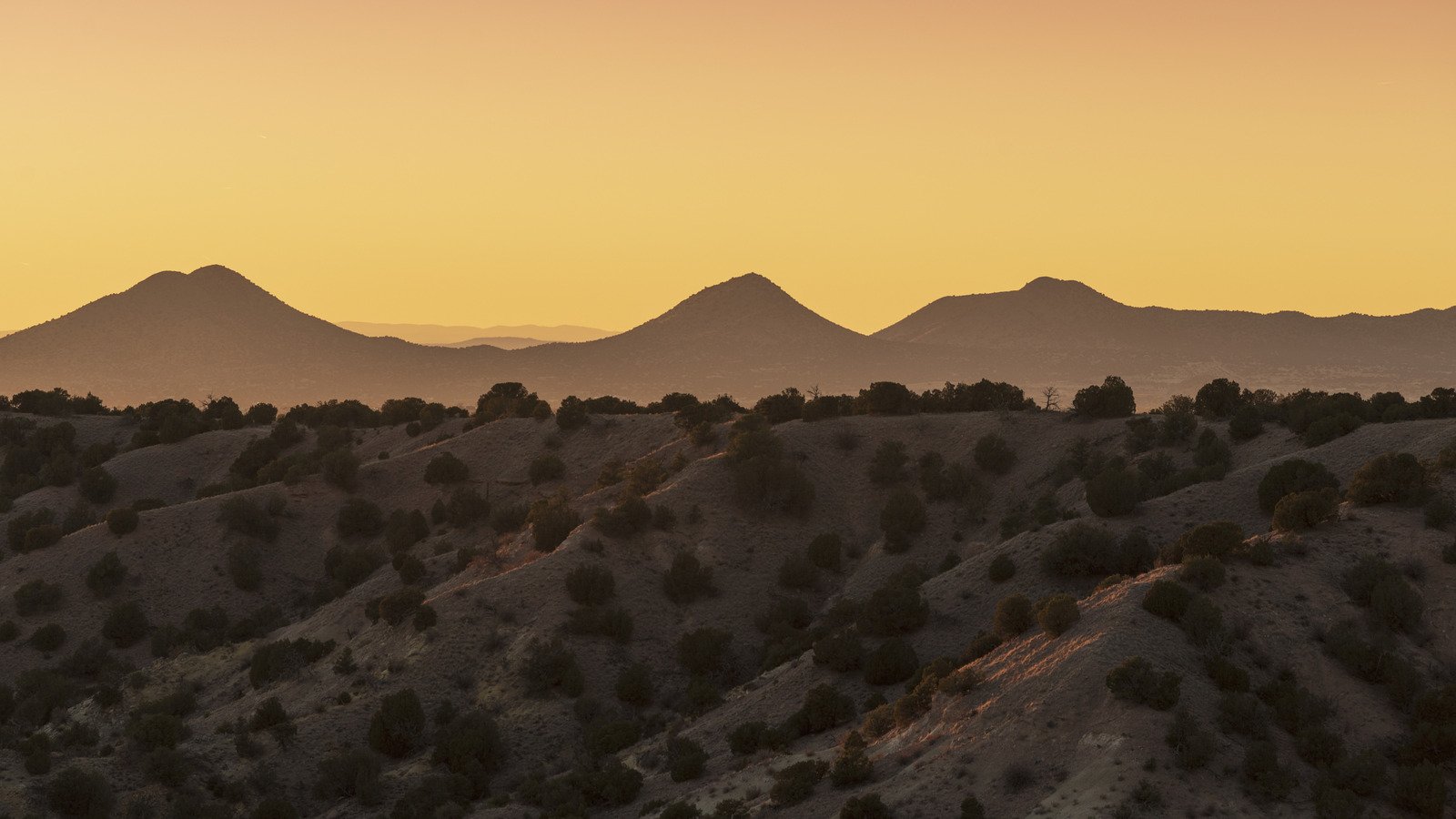
Construction in Galisteo, New Mexico: Creek, Basin and Buried History
Before any building in Galisteo is drawn, the creek and the buried past both have to be understood, and we make that study the opening step of every job here. We build small commercial, agricultural, studio and community structures along Galisteo Creek, and we help owners separate what the land allows from what the plan hopes for.
Galisteo sits at 6,119 feet with 253 residents in the 2020 census, along Galisteo Creek in the Galisteo Basin, and it is part of the Santa Fe metropolitan statistical area in Santa Fe County. That last fact has a practical meaning: city suppliers and trades are within reach, and owners can expect to use them, although the setting feels far away. We combine the convenience of an urban labor and supply base with the care that a rural basin requires.
The Galisteo Basin holds abandoned Tanoan villages including Galisteo Pueblo, and a Tewa warrior-with-shield petroglyph is at Comanche Gap on private property south of town. Those are the best known features, and they hint at how much more may lie under nearby parcels. Our approach treats the possibility of archaeological material as a normal planning question, not as an obstacle.
Creek, floodplain and basin soils
Galisteo Creek shapes drainage, and the basin around it collects water from a wide area. We advise owners to confirm floodplain status early, to keep buildings above identified flood levels and to leave natural drainage paths open. Where a pad must be raised, we compact and grade it carefully so that it sheds water and does not push it onto neighbors.
Basin soils vary, and some can be expansive or erodible. A geotechnical investigation tells us how deep to place footings, how to treat the subgrade and how to protect slopes. We also plan temporary erosion control, since a summer storm on freshly graded ground can send silt into the creek, and we keep a stock of straw wattles and silt fence on hand for that reason.
Cultural resources and the building code
In a basin with abandoned villages and rock art, cultural-resource review is a reasonable expectation. Whether it applies depends on land ownership, funding and permits, and we recommend that owners ask early. We add any survey or clearance to the schedule ahead of grading, and we brief crews on what to do if anything unusual is uncovered.
For the building itself, the 2021 New Mexico Commercial Building Code adopts the 2021 International Building Code as amended and took effect July 14, 2023, and the 2020 New Mexico Electrical Code took effect March 28, 2023. We summarize the governing codes for the design team and confirm the edition in force at the time of permit.
A small basin community in a larger metro
Galisteo's place in the Santa Fe metropolitan statistical area means owners often have ties to the city: they work there, own businesses there or come from there. The buildings they ask about here are a gallery or studio, a barn or workshop, guest quarters, an event space, and the offices of a small ranch or land stewardship operation.
Neighbors in Lamy and Cerrillos face similar questions about water, archaeology and distance, and we plan jobs in these communities with the same logistics in mind. Because many parcels lie off paved roads, we visit before pricing to look at the access, gates and culverts construction deliveries will use.
A conservative, well-documented process
We write a short preconstruction memo for every Galisteo job. It lists the known constraints, the approvals needed, the unknowns still to be resolved and the order in which we will resolve them. The memo is plain enough for an owner to share with a lender or neighbor, and it keeps the project from relying on memory.
We keep the building's footprint and disturbance area as small as the use allows. A smaller footprint reduces both cost and risk, since each additional square foot of ground disturbed is another square foot that might require review or erosion control.
Owners who build in the basin
The owners are a varied group: arts organizations, hospitality and event operators, agricultural and land-based businesses, small public agencies and private individuals who run businesses from their land. Hospitality groups may ask about lodging and event space, while property managers ask about long-term maintenance and documentation.
Public owners follow procurement rules that we respect to the letter, and the approach we take with government and public sector owners is the same in a small basin as in a city. Whatever the owner, we close the project with as-built drawings, warranty information and a short maintenance guide.
What shapes the price in a rural basin
The main cost drivers are access, utilities, drainage and review. A long driveway, a distant power connection, a well or septic system and an archaeological survey can together cost more than the structure they serve. We itemize them so the owner can see how much of the budget is the building and how much is the land.
We also encourage early decisions on finishes and systems, since late changes are expensive where every delivery involves a long drive. Our preconstruction estimating and site development and utilities planning are designed to bring those decisions forward.
Begin a Galisteo project
Tell us about the parcel, the use you have in mind and what you already know about its water and history. We will visit, listen and prepare a preconstruction memo you can share with your lender and your neighbors.
Questions Owners Ask
Is flood risk a real concern along Galisteo Creek?
It deserves study on any parcel near the creek or its tributaries. We recommend that the owner check floodplain information for the specific site and that the design team set the finished floor and grading accordingly. A drainage review during preconstruction is inexpensive compared with the cost of an elevated pad or repairs after a storm.
Will my project need an archaeological survey?
It may, depending on who owns the land, whether public funds or permits are involved and what is known about the parcel. We cannot tell you in advance, so we suggest asking the responsible agencies before design begins. If a survey is required, we place it ahead of grading on the schedule.
Can a small farm or ranch building be permitted differently from a commercial one?
Possibly, depending on use and jurisdiction, and the answer can change the code path and the fees. We ask the owner to describe the use fully, including any public visitors, and we confirm the classification with the permitting office before pricing. Honest descriptions at the start prevent redesign later.
How much does distance add to the cost?
It adds travel, mobilization and the occasional day lost to a missing part. We show those costs separately and reduce them by grouping trades and ordering ahead. The basin is within reach of Santa Fe suppliers, which keeps the premium modest compared with more remote villages.
What documents should I bring to a first meeting?
Bring the deed, survey, any earlier approvals, well and septic records, photographs of the site and a description of the intended use. If you have a design or sketch, bring it. We use these to prepare the preconstruction memo and a first list of questions.