
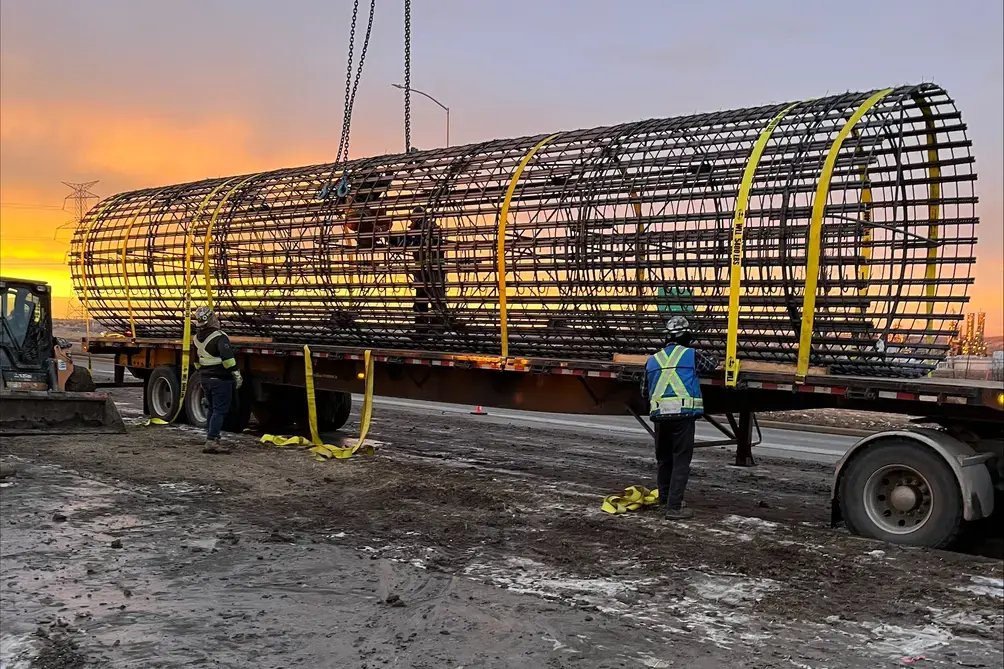
Deep Drilled Pier Foundations Near the Rio Grande and Beyond
Where the Rio Grande, the Rio Chama and the Rio Santa Cruz meet at Espanola, the ground is a layered record of old floods, and a shallow footing may have to reach through several of those layers before it finds something firm. A drilled pier is one answer: a cylindrical shaft bored to a chosen depth, reinforced and filled with concrete so that the load of the building passes directly to stronger material below.
We drill and place piers for commercial buildings, equipment pads, retaining systems and structures on slopes across the metro. The decision to use them is made by the geotechnical and structural engineers, and it is rarely made lightly, because it brings a rig, a crew and an inspection regime onto the site. Our part is to make that process orderly and to tell an owner early what it will do to the schedule.
We find that piers suit a patient builder. Every shaft is a small project of its own, with its own log, its own inspection and its own pour, and it rewards those who do not hurry.
Where deep foundations are called for
The soils around the confluence at Espanola include river deposits that vary from one parcel to the next. On hillsides above the valley, foundations may need to cross fill, weathered rock or loose colluvium to reach competent bearing. Load matters too. The Crosby Theatre at the Santa Fe Opera, which replaced the 1968 auditorium in 1998, has a cable-supported roof joined by a clerestory window and open sides, and a roof like that pulls on its foundations as well as pressing down on them.
Access can be as important as soil. Los Alamos sits at about 7,300 feet and is reached only by NM 4 and NM 502, so a drilling rig bound for Los Alamos arrives on a short list of roads, and we plan the move, the permits and the staging area in advance.
Drilling, casing and the day of the pour
A rig is mobilized once the layout is surveyed and the utilities have been located. We bore each shaft to the elevation on the drawings, keep a log of the materials encountered and compare it against the soils report. If the ground collapses or water enters, we use temporary casing or slurry to hold the hole open, and the engineer decides whether the bearing material is acceptable before steel goes in.
The reinforcing cage is lowered with spacers so that cover stays even, and concrete is placed from the bottom up so that it displaces water and loose material. We plan the pour so that each shaft is completed on the day it is drilled whenever possible, because an open hole left overnight invites trouble. Embedded plates and anchor bolts are set before the concrete stiffens, and checked again afterward.
Inspection records and structural review
Deep foundations are designed under the 2021 New Mexico Commercial Building Code, which adopts the 2021 International Building Code as amended, and each shaft is normally observed by a geotechnical engineer or special inspector who records diameter, depth, bearing and concrete volume. We keep our own parallel record so that questions can be answered from both sides of the fence.
Review of nearby ground disturbance may also come into play, especially in older communities and on parcels with a history of use. For work that links to a larger structure, we coordinate with the frame described in our structural steel erection work, because pier locations and bolt patterns have to match the steel layout to the fraction of an inch.
What changes the price of a pier
Diameter and depth are the obvious drivers, but they are rarely the largest ones. Mobilization of the rig, the presence of groundwater, the need for casing, the amount of spoil to haul away and the number of inspection visits all affect cost. A small project with only a handful of piers may carry mobilization that is large compared with the drilling itself.
We help owners decide whether piers or a conventional concrete foundation makes sense by pricing both against the soils report. Developers weighing a plant or warehouse parcel, including those we assist in manufacturing, benefit from knowing early whether the building will need deep support, because it affects the land price they can afford to pay.
Working safely around open shafts
An open shaft is a fall hazard, and a rig is a heavy machine with a moving mast. We cover or barricade every open hole, keep pedestrians and unrelated trades out of the drilling area, and stage spoil away from the edge. Crews are briefed daily on the shafts being drilled and on the position of overhead lines and buried utilities.
Concrete trucks, pump lines and rebar deliveries all converge on the same small area at once, so we manage the traffic the way a conductor manages a score, one entrance at a time. If you are planning a hospital or similar facility with strict site controls, our approach to hospital construction includes planning rig access around operating buildings.
Let the soils report speak first
Send the geotechnical report and the structural concept and we will outline how piers would be drilled, sequenced and inspected on your site. The earlier we see the ground conditions, the more calmly the schedule can be set.
Questions Owners Ask
How do I know if my building needs drilled piers?
The geotechnical engineer makes that call after borings reveal what lies beneath the site. Weak or variable soil, high column loads, expansive clay, steep slopes and nearby excavations all push a design toward deep foundations. If the report recommends them, we can price the work and compare it with alternatives so the decision is made with numbers.
How long does it take to drill and pour a pier?
A typical shaft can be drilled and poured in a day or less once the rig is on site, though depth, groundwater and rock affect that. The larger schedule question is mobilization, inspection and curing before the next trade can load the shafts. We give a sequence rather than a single figure, because it is the sequence that decides when the frame can start.
Can a rig get to a remote or mountain site?
Usually, with planning. Narrow roads, weight limits and tight turns can restrict equipment, and we confirm routes before booking. For a community served by only a few roads, such as Los Alamos, we plan delivery windows and may use smaller rigs. We always walk the access route with the owner.
What if we hit rock or water at depth?
Both are possible and both are manageable. Rock may require specialized tooling and more time, while water calls for casing or slurry and careful concrete placement. The contract should address these conditions in advance, with unit prices for extra depth and for additional equipment, so surprises are not argued after the fact.
Will neighbors notice the drilling?
They will hear it. Drilling rigs, concrete trucks and pumps are loud, and the work is concentrated in a few days or weeks. We talk with adjacent owners before mobilizing, limit work to agreed hours and keep the access road clean. Vibration from drilled shafts is generally lower than from driven foundations, which is one reason they are chosen near occupied buildings.