
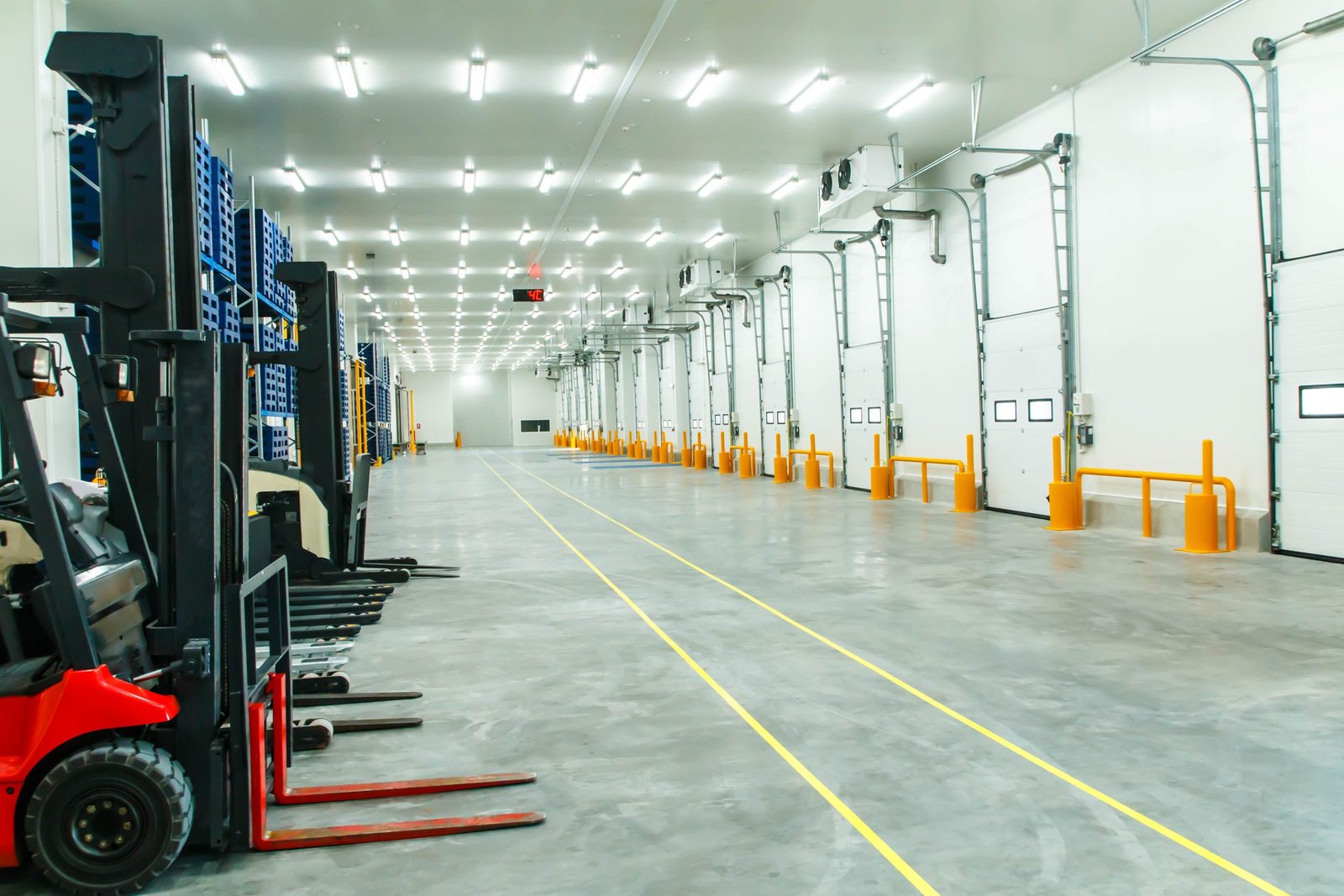
Cold Storage Construction in Santa Fe and Northern New Mexico
The Embudo Valley is a significant fruit and grape growing area, with two wineries near Dixon, and the farmers' market at the Santa Fe Railyard puts local produce in front of the city every week. Where there is a harvest, there is a need to keep it cool, and that need rarely fits inside an ordinary building. A walk-in cooler behind a kitchen is one kind of project. A freestanding cold room for a grower or a producer, with its own dock, power and refrigeration plant, is another, and the second kind is where careful construction pays back.
A cold storage building is mostly a thermal problem wearing the clothing of a warehouse. Insulated panels, vapor barriers, tightly sealed doors and a floor that will not heave in the cold are what keep the building working. We build coolers and freezers for growers, food businesses, institutions and distributors in northern New Mexico, and we work with refrigeration engineers who size the plant while we build the envelope that lets it do its job.
Codes and approvals for a refrigerated building
A cold storage building is permitted under the 2021 New Mexico Commercial Building Code and the 2021 New Mexico Commercial Energy Conservation Code, which took effect January 30, 2024 and adopts the 2021 International Energy Conservation Code as amended. Refrigerated spaces have their own provisions in energy codes, and the envelope assemblies need to be submitted with the right values. Refrigeration piping and equipment follow the mechanical code, and the state's code page lists a 2024 Mechanical Code effective August 1, 2026, with permits under either edition until January 1, 2027.
Refrigerants add another layer. Ammonia systems bring process safety questions, while CO2 and synthetic refrigerants have their own requirements. We coordinate with the refrigeration engineer and the fire authority from the start, and we arrange for any needed hazard analysis before design is complete. If the building is near a historic area, the exterior appearance must also pass review.
Where the money goes in a cold building
Insulation, refrigeration equipment and electrical service account for most of the cost. A freezer costs more to build and much more to run than a cooler, and the colder the temperature, the heavier the insulation, the more robust the floor and the larger the power service. We help owners decide how much of the space truly needs to be frozen and how much can be held at a cool temperature.
Operating costs matter at least as much as construction costs. Tight doors, strip curtains or vestibules, efficient defrost cycles and well-placed evaporators save energy each day. Cold nights help condensers reject heat in winter at northern New Mexico elevations, though summer loads must still be met. For owners considering a distribution business, distribution center construction describes how these buildings connect to wider logistics.
Floors, doors and the details that fail
A freezer floor can freeze the soil beneath it. Over time, frozen soil expands and lifts the slab, which cracks and distorts the building. We prevent this with underslab insulation and either heating elements or ventilation that keeps the ground above freezing. This detail must be built correctly the first time, because repairing a heaved freezer floor means closing the facility and breaking out the slab.
Doors, seals and penetrations are the other weak points. Every conduit, pipe and cable through an insulated wall is a possible vapor leak, and moisture that enters a cold wall turns to ice and destroys the insulation. We seal penetrations carefully and verify the envelope with inspections before closing the walls. Owners who expect later expansion can look at pre-engineered metal buildings for a simple shell that accepts insulated panels.
Safety in cold, sealed spaces
Cold rooms carry hazards that other buildings do not. Workers can be trapped in a freezer, so interior release hardware and alarms are essential. Ammonia systems need detection, ventilation and emergency procedures. Slippery floors, condensation and ice buildup require attention in design and in operation.
During construction, we protect insulation panels from rain and damage, control moisture at every stage and keep workers trained on the hazards of the particular refrigerant selected. When the building is commissioned, we test alarms, release hardware, backup power and temperature monitoring together, and we help the owner prepare operating procedures that match what was built.
Who needs cold space around here
Growers and winemakers in the Embudo Valley, restaurants and food producers in Santa Fe, and institutions such as Christus St. Vincent Regional Medical Center, which lists 206 all-private beds, all need controlled-temperature space in some form. Large casino resorts in Pojoaque, where the Pueblo operates three casinos, run hospitality operations that depend on food service. Each of these users has a different scale, a different product and a different regulator, and we ask which of them is yours before we say anything about the building.
Many of these needs are small, and small projects deserve the same patience as large ones. A single well-built cooler can serve a farm stand or a food hall, and a modest freezer addition can transform a small producer. We approach each of them with the same care, whether the project is in Pojoaque or in the Railyard District, and we think about how the hospitality groups and healthcare systems that rely on cold storage use their space.
Keep it cold, keep it simple
Tell us what you store, how much and at what temperature. We will describe the building, the plant and the review steps in plain terms, and give you a budget range to work from.
Questions Owners Ask
What is the difference between a cooler and a freezer in construction terms?
Freezers need thicker insulation, underslab protection against frost heave, heavier electrical service and tighter control of moisture. A cooler can often use a standard slab and thinner panels. Because the cost gap is large, we ask what temperature each product truly needs before sizing the space.
Can we add a cooler to an existing building?
Often, yes, as a prefabricated walk-in or a built-up insulated room. The existing floor, power and drainage have to support it. We survey the building first, and if the slab cannot handle a cold room, we propose a separate addition.
How long does it take to build a small cold storage building?
Allow time for design, equipment lead times and permitting, which together can exceed construction time. Refrigeration equipment and insulated panels are ordered early. Once on site, a small building can be enclosed and commissioned in a few months.
What about power outages?
Cold storage depends on power, so we discuss backup options early: a generator with transfer switch, remote temperature monitoring and, for critical product, redundant compressors. Insulation also gives some ride-through time, and the right choice depends on the value of what is inside and on how quickly someone can reach the building at night.
Do refrigerant rules affect design?
They do. The refrigerant determines equipment type, piping, ventilation and safety systems, and some require added fire-department review. We bring the refrigeration engineer into planning early so the building is designed for the system, not retrofitted to it.