
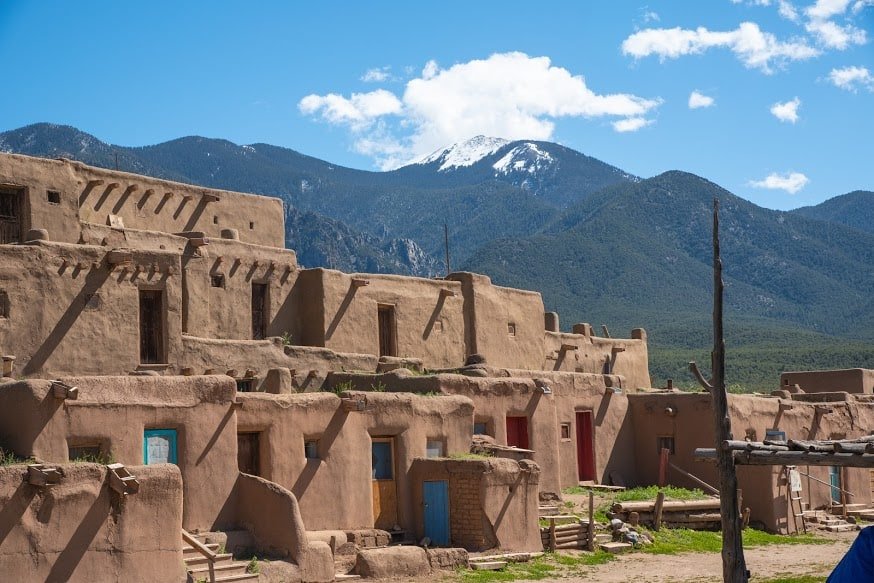
Building in Taos means planning the haul before the foundation. Steel, rebar, glass and cabinetry all reach a Taos site by the same few roads, and the one most trucks use, NM 68, runs 45.513 miles along the Rio Grande from Espanola to Taos and is two lanes with very few passing opportunities between Velarde and Taos. A late delivery is rarely a matter of one driver's bad day. It is the geography, and we schedule around it.
We work for owners, developers, lodging operators, schools and public agencies who need a general contractor willing to learn how a mountain town builds. That means accounting for a site at about 6,969 feet, for winters that shorten the concrete and exterior finish seasons, and for subcontractor availability that thins out as you leave the valley floor. Our plans are written for those limits, not for a flat metropolitan area with a supplier on every corner.
The buildings we take on in Taos
Our Taos scope covers lodging and hospitality renovations, restaurants and small retail, medical and professional offices, school and community buildings, and mixed-use infill. A good part of the work is renovation, since older construction often has irregular geometry, adobe or masonry walls and utilities that no one drew. We open a small area early, document what is behind the wall, and give the design team real conditions before the drawings are finished.
For owners of lodging, our work with hospitality groups concentrates on keeping rooms available. We phase renovations so a portion of the property keeps operating, protect guests from dust and noise, and sequence loud work away from the hours when it will hurt your occupancy. Schools and public buildings follow a similar logic on the academic calendar.
Altitude, snow and the ground itself
At roughly 6,969 feet, Taos has a long cold season. Roof design, snow retention, flashing details and insulation values matter more here than at lower elevations, and we review those with the design team before the roof is bid. Concrete work needs a plan for cold placement, with blankets, heated enclosures and admixtures where the forecast calls for them, and we keep a record of curing temperatures so the engineer can sign off on strength.
Soils vary from the valley floor to the slopes above it, so geotechnical information carries real weight on a Taos project. Frost depth, expansive or collapsible soils and drainage across sloping lots all influence concrete foundations, and we would rather pay for another boring early than redesign a footing in a trench.
Scheduling around a two-lane supply line
Because deliveries share NM 68 with commuters and local freight, we plan loads for off-peak hours and avoid stacking oversize deliveries on a single day. Long-lead items such as windows, steel and mechanical equipment move through long-lead procurement early, so the order is placed before the fabricator's queue fills. We also look for storage options on or near the site, since a small lot with no laydown space forces just-in-time deliveries that the road does not always permit.
Mountain weather needs its own float. We build weather days into the exterior schedule, sequence enclosed work for the coldest weeks and keep the crew productive indoors when the exterior is not safe. An honest schedule in Taos looks longer on paper than one for the same building in a larger market, and it usually finishes closer to the date.
The Taos market, as we read it
Taos Regional Airport, at 7,095 feet on 832 acres, opened its main runway, 13/31 at 8,600 by 100 feet, on August 25, 2017, and a second runway, 4/22, measures 5,504 by 75 feet. Facilities of that kind draw hangar, terminal and ground-support work, and they remind a builder that the town's market depends on how easily people and materials arrive.
Beyond the airport, building demand follows lodging, health care, education and renovation. Our nearby pages for Questa and Dixon describe how smaller communities in the area differ, and aircraft hangar construction suits airfield owners who need clear-span structures on high-elevation sites.
Code, safety and the quiet details
The New Mexico Commercial Building Code adopts the 2021 International Building Code as amended, effective July 14, 2023, replacing the 2015 code, so plans drawn on older assumptions need review before submittal. We read the amendments with the design team and flag differences that affect structure, egress or energy before they affect the permit.
On site, cold and altitude change the safety plan. We carry heaters and warming breaks for winter work, plan for ice on staging and walking surfaces, and watch crews for altitude fatigue. Quiet details matter as well: clean job sites, courteous traffic control and respect for neighbors go a long way in a small town where an owner's reputation travels by word of mouth.
Services we pair with Taos work
Taos projects rarely need a single trade. Phased construction on occupied sites is the service we reach for most on lodging and public buildings, because it keeps the owner's operation running. Education facility construction follows the school calendar, with summer windows for the loudest work, and tenant improvements fill the gaps between larger jobs.
Since the valley floor and the road to it are part of the same trip, we also build in Espanola, where NM 68 begins, and we know the drive. Mobilizing a crew from the south costs time, so we combine trips, share equipment where we can and tell owners plainly what a remote site adds to the price.
Start a Taos project with a plan for the road
Send us the site, the program and your preferred opening date. We will review haul routes, weather windows and permit steps, then return a schedule that treats the mountain as part of the work.
Questions Owners Ask
How does the location affect my construction schedule?
Materials and subcontractors arrive over long, two-lane roads, and NM 68 between Velarde and Taos offers very few passing opportunities. We schedule deliveries for off-peak hours, order long-lead items early and give the exterior schedule weather float. Owners should expect a longer duration on paper than for the same building in a larger market.
What code edition governs a new building in Taos?
The New Mexico Commercial Building Code adopts the 2021 International Building Code as amended, effective July 14, 2023, and replaced the 2015 code. Drawings begun under the older assumptions need a review before submittal. We confirm the edition and any local amendments during preconstruction and flag items that change structure or cost.
Can you renovate an older building without closing it?
Often, yes. We phase the work by area, build dust and noise barriers, protect egress and keep life-safety systems live. For lodging we aim to keep as many rooms in service as possible. The plan is agreed with you before work starts, including any shutdowns for utilities.
What does a remote site add to the price?
Mostly time and logistics: travel for crews, longer delivery lead times, fewer local suppliers and weather allowances. We show these as separate lines in the estimate so you can see them, and we look for ways to reduce them, such as combining deliveries, storing material on site and scheduling trade crews back to back.
How does winter change concrete and exterior work?
At roughly 6,969 feet, cold placement needs blankets, heated enclosures or admixtures, and we record curing temperatures. Exterior finishes such as stucco and roofing have temperature windows, so we sequence them into warmer months where we can and move interior work forward in winter.