
About 1,400 houses stand in Rancho Viejo today, and its planners expect 8,000 to 10,000 over the next fifty years, with half the land kept as parks, open space and trails. Households that grow into a place like that need somewhere to put the things that do not fit in a garage: a boat, a second vehicle, a lifetime of books and tools, a business inventory. Self storage meets that need, and the buildings can look simple. They are not. A storage property is a long, repeated roof over a very large slab, and the quality of the grading, the drainage and the doors decides whether it earns its rent for many years.
We build climate controlled and drive-up storage, conversion of older buildings, vehicle and RV storage, and the office and gate systems that make a property secure. In this part of New Mexico the work comes with a few special conditions: rocky slopes, long winters, strict visual standards in many communities and, on occasion, archaeological sites near the proposed footprint. We plan for each of these before a unit is priced.
Sites, slopes and the things beneath them
The Eldorado area sits at 6,683 feet, and the Pueblo Alamo archaeological site lies near the junction of I-25 with US 285. That is a reminder that the ground around Santa Fe may hold more than rock and caliche. Before we grade a parcel, we ask whether a cultural resource survey has been done, and if it has not, we recommend one early. An archaeological clearance takes time and should never be an afterthought, because a find can change the layout or stop work.
Storage sites are often long, narrow and sloped, and a terraced layout can reduce earthwork. We work with the civil engineer to place buildings along contours, to keep drive aisles gentle enough for moving trucks and to direct runoff away from the doors. Winter snow must have somewhere to go, so we leave room for plowing and for melt to drain. These details are inexpensive on paper and expensive to fix on the ground.
Drive-up, climate controlled and vehicle storage
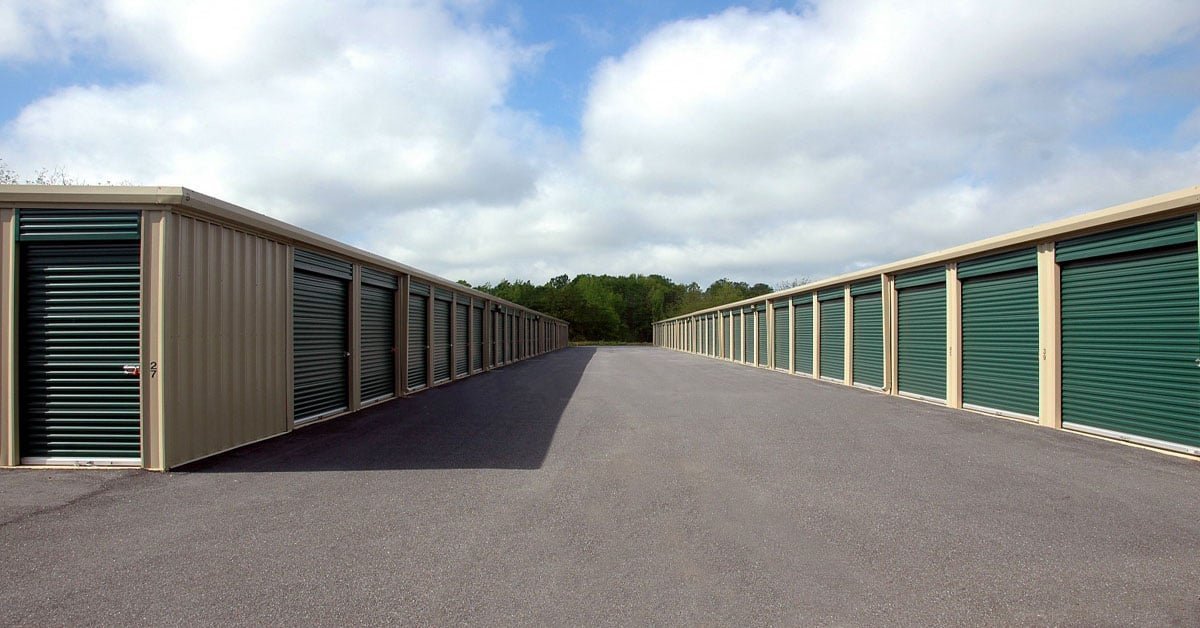
Drive-up buildings are usually light steel framed, with roll-up doors, corrugated or stucco-finish panels and a gently sloped roof. Climate controlled buildings are heavier, with insulated envelopes, interior corridors, elevators if multi-story, and mechanical equipment sized for dry, cold air. Vehicle storage lots call for paving, drainage and gates, while enclosed boat and RV bays call for tall doors and clear height. Our self storage construction practice covers each type under the same supervision.
Offices are small but important. They hold the check-in counter, the camera systems, the access controls and sometimes an apartment for a resident manager. We build them to the same standard as a small shop in a retail center, and we coordinate the low voltage systems with the operator's software vendor so that gates and doors work on the first day.
Managing the repetitive work closely
A storage project is full of repetition, and repetition rewards a team that knows the details. We schedule and inspect much of the site concrete and slab work closely, from setting forms to pouring and finishing. A slab that is flat and well drained keeps doors aligned and water out, and one trade partner placing every unit slab under our supervision brings consistency to the whole property.
We pair that work with the metal building supply chain, coordinating erection and door installation so the building is under roof quickly. Our work with pre-engineered metal buildings gives us a close relationship with the engineers and erectors who produce the frames, and it lets us offer owners a choice of finishes that suit the neighborhood.
What changes the cost per rentable foot
Owners compare projects by cost per rentable square foot, so we look for choices that improve that number. Sitework is often the largest variable, since steep or rocky ground can double earthwork. Climate controlled space costs more to build than drive-up space but rents for more, and the right mix depends on the market. Door packages, security systems and signage also move the price, as do utilities that must be extended from the road.
We help the owner phase the property, building the first set of units to establish income and leaving pads graded for later expansion. Phased building lets an owner test demand in a growing area and put capital into a second phase only when the first is filling. Property management firms that will operate the site often join early meetings, since their experience with tenants and security shapes the layout.
Approvals for storage in growing communities
Storage buildings are permitted under the 2021 New Mexico Commercial Building Code and its fire provisions, and they must satisfy the 2021 New Mexico Commercial Energy Conservation Code, effective January 30, 2024, when they are conditioned. In Santa Fe County, the Community College District plan was incorporated into the county's Sustainable Land Development Code in 2016, which guided development south of the city including Rancho Viejo.
Because many neighbors want storage buildings to look like part of the landscape, we prepare color samples, screening plans and lighting details for review. The same attention applies along the 285 corridor near Eldorado at Santa Fe, where open land and quiet roads set the tone for what neighbors will accept. Storage owners who also plan flex or light industrial space on the same parcel can often share utilities and access, and we study that option at the start.
Start with the parcel
Send us the lot, the slope and the number of units you have in mind. We will review grading, approvals and utilities, then propose a phased plan that opens income early and leaves room to grow.
Questions Owners Ask
How long does it take to build a self storage property?
A single drive-up phase can be erected within a few months once grading is done and the permit is in hand. Climate controlled buildings take longer because of the envelope and mechanical work. Approvals, utility extensions and, where needed, archaeological review often set the pace, so we map them before we promise a date.
Is a cultural resources survey really necessary?
In parts of northern New Mexico, yes. Sites such as the Pueblo Alamo archaeological site near Eldorado show that cultural resources are scattered around the region. A survey early in the process costs far less than an unexpected stop in the middle of grading, and some agencies require clearance.
Should I build drive-up units, climate controlled units or both?
It depends on your market. Drive-up units cost less to build and appeal to customers who value quick access, while climate controlled units appeal to those storing furniture, records and electronics. A mix lets you serve both groups and spread risk. We help you price the options and choose the sequence.
Can I expand a storage property later?
Yes, and we plan for it. We grade future pads, size utilities and design drainage for the full build-out, then construct the first phase. That way a later phase does not disturb the first one or require new infrastructure.