
Construction for Multifamily Developers in Santa Fe and Northern New Mexico
Seven villages, each with a central plaza, are the plan behind Rancho Viejo, which began with a 350-unit demonstration village after talks in 1997 among a developer, a design firm and Santa Fe County planners. As of a June 2023 report, about 1,400 houses had been built, with 8,000 to 10,000 projected over the next 50 years and half the land kept as parks, open space and trails. A project like that teaches a builder patience. Housing in this part of New Mexico grows slowly, in phases, and with a lot of public conversation attached.
We build multifamily for developers who think that way: garden-style and podium apartments, townhome clusters, senior and student housing, and mixed-use buildings that put homes over shops. We care about how a building sits on its lot, how its stucco and massing read from the street, and how it will be maintained in twenty years. A project that gets through county or city review gracefully usually does so because its builder understood what the reviewers were protecting.
Most of the apartments we talk to developers about will rise either on infill land inside Santa Fe or at the growing edge, where infrastructure and neighbors set the pace.
Infill, Villages and the Community College District
Two scales of project dominate local conversation. The first is infill, such as the three-story Escarpa apartment complex announced in 2021 at Santa Fe Place on Cerrillos Road. Building apartments on land that already has parking, utilities and bus service is a sound idea, and it asks a builder to work around a neighbor that is still open for business. We handle this kind of site on the Cerrillos Road corridor with phased fencing, protected customer access and careful deliveries.
The second scale is the planned community. The Community College District plan covers about 17,000 acres south of Santa Fe and was incorporated into Santa Fe County's Sustainable Land Development Code in 2016. Rancho Viejo grew out of that plan and reserves 15 percent of homes as affordable housing. If you are developing in or near the Rancho Viejo area, we can explain what the county will ask for and how to price the affordable set-aside into a realistic budget.
Product Types We Build
Garden apartments with surface parking are the simplest to price and the quickest to finish. Podium buildings, with parking or retail under wood-frame floors, add cost but make the most of constrained land, and they are the logical choice where a developer wants density near transit. Our service pages on multifamily apartment construction and podium and wrap construction describe the structural choices in more depth.
Senior and student housing share a language of common spaces, accessibility and shared kitchens, and they often sit near a campus, hospital or town center. We build with attention to corridor widths, elevator reliability and quiet unit demising, all of which tenants notice. For mixed-use buildings, the multifamily and mixed-use page covers how we handle fire separations between residential and commercial floors.
Building Housing That Passes Review Gracefully
We start with the neighbors. In Santa Fe, an apartment building is judged by its shadow, its height, its color and how it meets the sidewalk, and the reviewers are often people who live a block away. We bring elevation studies to the table, build mockup walls when finishes are in question, and walk with the architect through each condition we think a reviewer will notice.
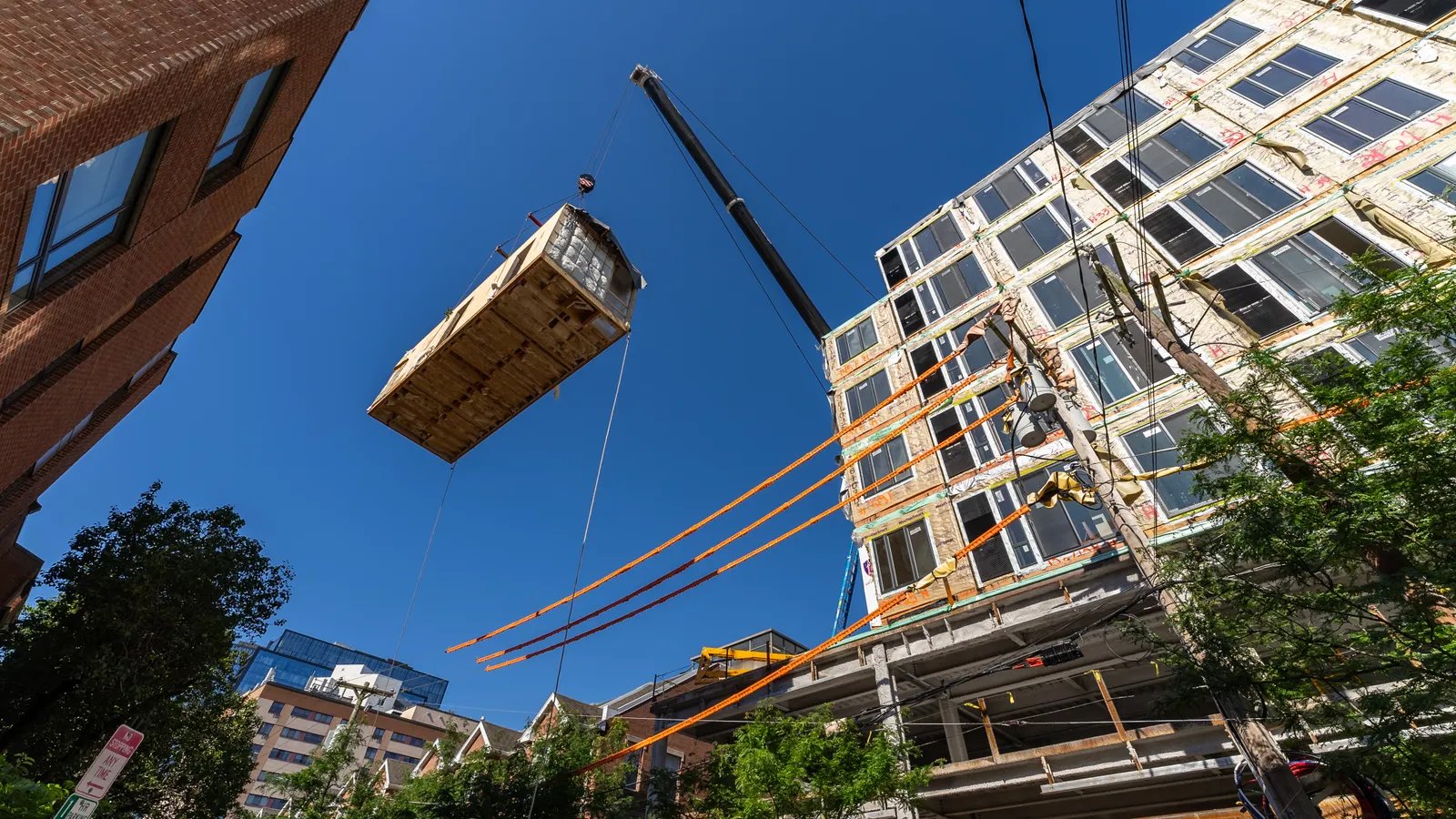
Inside the building, the work is orderly and plain: framing crews staged by floor, rough-in inspections scheduled in advance, and a firm approach to moisture management during construction. A wood-frame apartment building left open to a monsoon storm can lose weeks. We stage dry-in carefully, tarp sensibly, and sequence stucco and roofing so that water does not find a way into the structure while the building is still open.
What Drives Cost in Local Apartment Work
The biggest single driver is usually land and infrastructure, not the building. Extending water, sewer and road improvements to the edge of an existing village can exceed the cost of a floor of apartments. We price site utilities early and separately, so your pro forma is not built on a guess. The second driver is exterior finish: stucco systems that read as traditional adobe, colors that must be matched, and parapets built to a prescribed height all cost more than a flat siding package.
Affordable housing requirements deserve plain treatment. Reserving 15 percent of homes for affordability, as the Rancho Viejo plan does, means those units must be built to the same standard as the others, so we do not assume cheaper finishes will save money. We help owners model the true cost per unit using our preconstruction estimating process before financing is locked.
Licensing, Codes and Occupancy
The state's licensing rules matter to developers because they define who may legally build what. A GB-2 residential license is limited to residences and apartment houses of not more than four family units, while the broader GB-98 general building classification covers residential and commercial buildings and requires four years of foreman level experience, at least two of them commercial. A larger apartment building is therefore commercial work in the eyes of the state, and it falls under the 2021 New Mexico Commercial Building Code, which adopts the 2021 International Building Code as amended.
We confirm early whether a building is regulated as commercial, which energy code applies, and whether any local fire code amendments affect sprinklers and access. When the site is inside a historic district, the design must also address the historic styles required by the city's ordinance. Putting those requirements on one list at the start of the job keeps design and pricing together.
Phasing Over Years, Not Months
Most multifamily developers here deliver in phases. A first building opens, leases, and funds the next. We plan sitework and underground utilities so that later phases can connect without tearing up finished paving, and we leave stubs, easements and temporary turnarounds ready. Residents of phase one should not live beside a trench.
When a project reaches into other uses, we coordinate with commercial real estate developers who hold the adjoining parcels, and with property management firms who will run the finished buildings. Their questions about access, maintenance and turnover are best heard before drawings are final.
Planning Homes in Northern New Mexico
Share the parcel, the unit count and the review path you expect. We will help you test the budget and the schedule before the design is committed, and we will tell you plainly what we think the neighbors and the boards will ask.
Questions Owners Ask
Does the affordable housing set-aside change how you build the units?
It changes the budget and the paperwork more than the construction. The units generally have to match the other homes in structure, mechanical systems and basic finishes, and the plans must show where they sit. We help owners plan the mix so affordable homes are spread through the community instead of concentrated. Early estimating tells you what the set-aside costs per unit, so you can negotiate with lenders and public partners using real numbers.
How do you protect a wood-frame building from monsoon weather during construction?
We sequence the work so that the roof and exterior sheathing are closed quickly, we use temporary covers and drainage at floors under construction, and we keep a clear plan for storm warnings. Wet framing is dried and inspected before it is covered. Mold and swelling are far cheaper to prevent than to repair, and we treat monsoon season as a scheduled risk rather than a surprise.
Can you work next to an operating shopping center or neighborhood?
Yes. On infill sites we separate construction access from public parking, set delivery windows, and keep walkways open and lit. Noise and dust control are written into the site plan, and we hold a standing meeting with adjacent owners so complaints are heard early. A neighbor who knows what is coming is much easier to work beside.
What should we know about Santa Fe County review before purchasing a parcel?
The county has a Sustainable Land Development Code that incorporated the Community College District plan in 2016, so parcels in that area are subject to a plan with specific expectations about open space, village form and housing mix. Check the zoning and the plan before you close, not after. We can walk a prospective parcel with your architect and tell you what the review is likely to involve.