
A performance venue has a deadline that no schedule can move: the night the doors open. We build and renovate for owners whose buildings serve a season, whether theaters and amphitheaters, event spaces, hospitality and support buildings, or the roads, parking and utilities that make them work, and we plan the construction calendar backward from opening day.
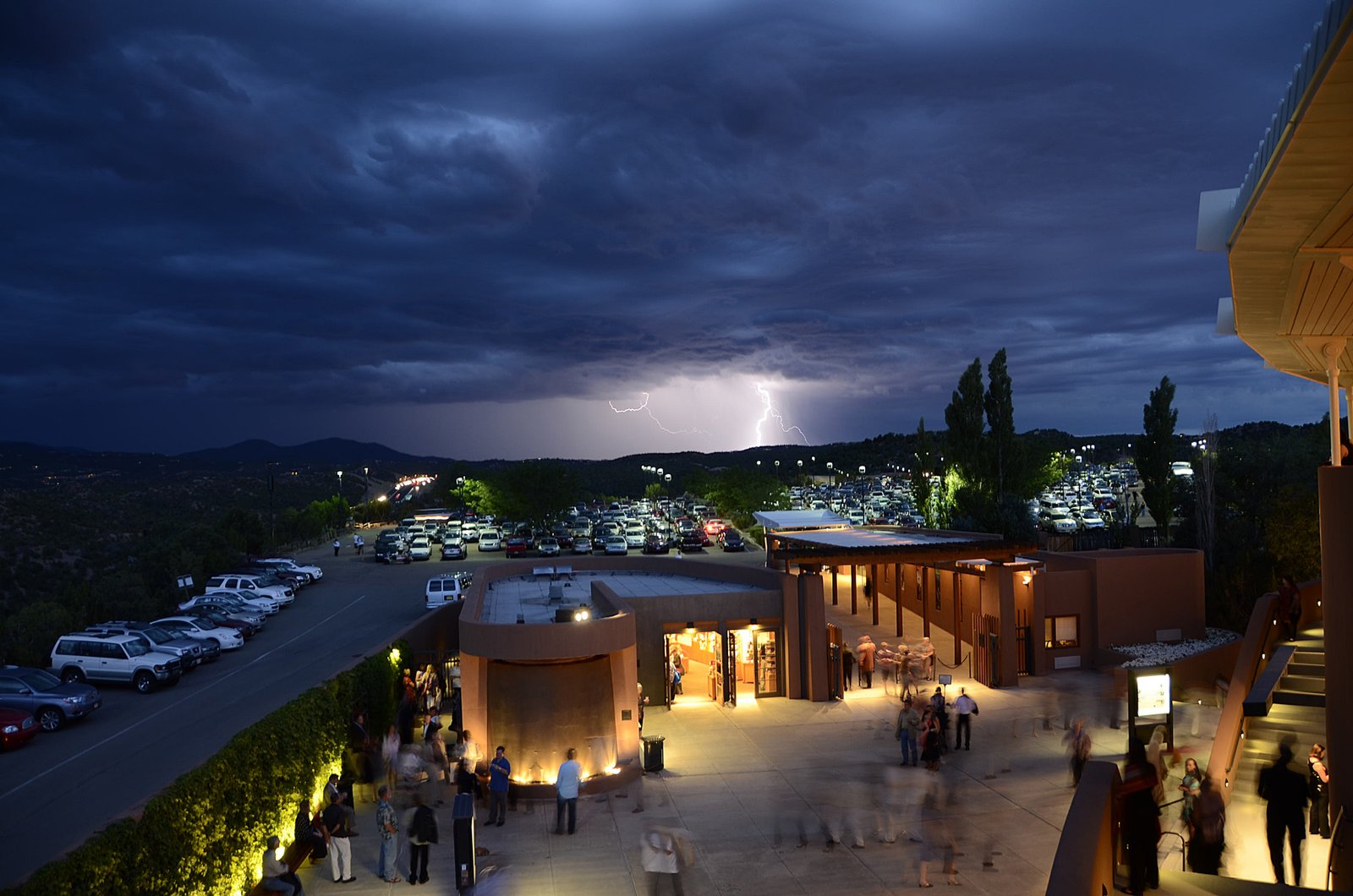
The Santa Fe Opera is at 301 Opera Drive, about 7 miles north of Santa Fe, and its Crosby Theatre seats 2,128 plus 106 standing places. That scale, set on a hillside outside the city center, is what owners in this area are building around: large public gatherings, a short and intense season, and a quiet landscape the rest of the year. Construction here has to be finished, cleaned and out of sight before the audience arrives.
Lessons from a theatre that has been rebuilt twice
The original open-air theatre opened July 3, 1957 and was destroyed by fire on July 27, 1967. About $2.4 million was raised to rebuild it in time for the 1968 season. That 1968 auditorium was later torn down in August 1997, and its replacement, the Crosby Theatre, took ten months to build and opened in early July 1998, with a cable-supported roof joined by a clerestory window and open sides.
Those dates are instructive. The first was a rebuild against a fixed opening, the second a demolition and reconstruction completed in about ten months. Both show why a venue owner needs a builder who values fire protection, procurement lead times and realistic float, and who tells the owner when a date is at risk rather than when it has already been missed.
What we build for venues and seasonal operators
Our scope for event and performance owners includes theaters, rehearsal and support buildings, stage and back-of-house facilities, patron service buildings, restaurants and bars, offices and housing for seasonal staff. We also build parking, roadwork and utilities, and we work with the owner's technical staff on rigging points, acoustics and lighting.
Open-sided structures carry particular requirements for wind, rain, drainage and acoustic control, which a roof with cables and a clerestory, like the Crosby Theatre, illustrates well. Our commercial construction teams coordinate structure, envelope and systems so that these requirements are met together and not one at a time.
Finishing in the off-season
A short off-season rewards a team that keeps many trades on one schedule. We schedule and supervise site concrete, foundations, rough carpentry and general finish work, and we manage steel, roofing, mechanical and electrical subcontractors under a single schedule. When the owner's date cannot move, having trade partners lined up to add a shift or fix a problem is worth more than a lower subcontract price.
We also use prefabrication where we can, with assemblies built off-site during other work and installed in short windows. For owners needing structural steel erection before a season, we bring the fabricator into the planning early so the steel is ordered and detailed with time to spare.
Backward from opening night
The schedule for a seasonal venue starts at the end. We list the date the building must be commissioned, the date inspections must be passed, the date for rehearsals, and the date structure and envelope must be complete. Everything else is arranged to protect those dates, and each week we report whether they are secure.
Access shapes the daily plan. US 84/US 285 runs north from Santa Fe toward Pojoaque and Espanola as a limited-access freeway for part of its length, and NM 599 ends at a trumpet interchange with it. We plan deliveries along that route, avoid performance days and coordinate with the owner's own operations. Our page on Pojoaque describes the communities to the north.
Fire, crowds and temporary conditions
The fire of July 1967 is a reminder of what can happen to a public venue. Modern venues require fire alarms, sprinklers or alternative protection, tested egress and smoke control, and the work must be inspected before any audience enters. We design the sequence of tests and inspections with the owner and the fire marshal, and we reserve time for correction.
During construction, we keep public routes separate from the work, control hot work carefully on dry and windy days and clean daily. If the owner holds events on adjacent grounds, we coordinate shutdowns with them. Our approach to municipal and civic buildings uses the same discipline.
What drives a venue budget
The costs that surprise venue owners are rarely in the walls. Specialized structure, acoustic isolation, theatrical systems, life-safety testing and the premium for working to a fixed date all add up. Hillside sites carry grading, retaining walls and drainage, and a remote location adds haul time for crews and materials.
We help boards and committees decide where to spend. An honest estimate separates the base building from the elements that make it a venue, shows the price of speed, and identifies which items can wait for a later phase. Owners who see those choices clearly can raise funds in stages without halting construction.
Building for culture and visitors
The market here is shaped by the performing arts, hospitality and the people who travel to the area. Owners may be nonprofit organizations, hospitality groups or private investors, each with different decision paths. Hospitality groups in particular ask for guest comfort, durable finishes and quick turnover between events.
We help organizations with boards by presenting options clearly: a base scope, alternates that can be added if funds arrive, and a sequence that lets a first phase be finished without committing to a second. In the city, our Plaza and Historic District page covers the review process that governs downtown buildings.
Open on the date you promised
Tell us the building, the season it serves and the day the doors must open. We will draw the schedule backward from that date and price each step.
Questions Owners Ask
How do you plan construction around a performance season?
We work backward from the first public event. Heavy and noisy work goes into the off-season, inspections and commissioning are scheduled well before the opening, and we leave float for failed tests. During the season we limit work to what does not disturb audiences, and we stop when the owner asks.
Can a theater be rebuilt in one off-season?
It has been done: the Crosby Theatre replaced the 1968 auditorium, which was torn down in August 1997, took ten months to build and opened in early July 1998. A comparable schedule demands early procurement, full-time supervision and a firm owner decision process, so changes do not cascade.
What fire protection should a venue owner expect?
Detection, alarms, suppression or an approved alternative, tested egress and smoke control, depending on the design. The original theatre was destroyed by fire in 1967, which is why owners here pay attention to this. Your fire marshal and design team decide the details, and we schedule the testing.
How do you handle rigging, acoustics and lighting loads?
We coordinate with the owner's technical staff and design consultants before the structure is finalized, since rigging points, roof loads and acoustic treatments are hard to add later. We list those requirements as part of preconstruction and verify them during the work.