Construction in Pecos, New Mexico: Clearances, River Land and Quiet Buildings
Anyone building near Pecos should expect the archaeological question to be asked before the structural one, and we ask it first ourselves. We build small commercial, institutional, lodging and community structures in and around the village, with an eye on the river, the national forest to the north and the protected ground that surrounds a good deal of the valley.
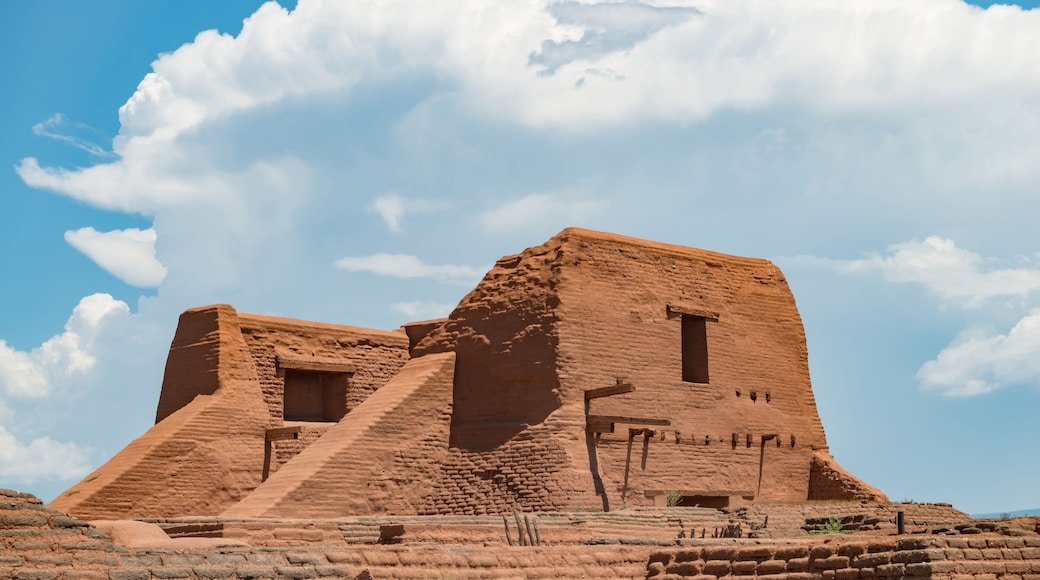
Pecos sits at 6,992 feet with 1,392 residents in the 2020 census, and the Pecos River flows from the Santa Fe National Forest to the north. Pecos National Historical Park covers 6,671.4 acres on NM 63 southwest of its junction with NM 50, about 17 miles east of Santa Fe, and it recorded 37,083 visits in 2025. Visitors in that number need places to eat, stay and buy supplies, and the village needs buildings that serve them without competing with what they came to see.
The park preserves two sections of the Glorieta Pass Battlefield, where the battle was fought March 26 to 28, 1862, and public access to them is limited by the National Park Service. Land with that kind of history is handled with care, and so is land near it: we assume nothing about what lies under a parcel until we have asked.
Clearances before the permit
Before any excavation near Pecos, we recommend that the owner ask whether the parcel has been surveyed for cultural resources, whether federal or state land or funding is involved and whether a floodplain or river setback applies. Each of those answers can add an approval to the schedule. An archaeological clearance, where one is required, is produced by qualified professionals and reviewed by the responsible agency, and it can take weeks or months.
On the building side, the 2021 New Mexico Commercial Building Code adopts the 2021 International Building Code as amended and took effect July 14, 2023, and the 2021 New Mexico Commercial Energy Conservation Code took effect January 30, 2024. We confirm the edition in force at permit and prepare a code summary for the design team, so that building approvals can proceed in parallel with the cultural review.
Patience as a method
We treat the review process as part of the work and give it a place on the schedule rather than hoping it will be quick. We prepare the site plan, building footprint and a grading sketch early so that reviewers can respond to something concrete, and we keep a plain record of correspondence, dates and conditions. The tone of those exchanges matters; reviewers respond well to a contractor who has read the file and asks narrow questions.
If a discovery is made during construction, we stop work in the affected area, protect it, notify the owner and the responsible agency and wait for direction. We write that procedure into the project plan and brief the crews on it, because it is far easier to follow when everyone has heard it before the first bucket of soil moves.
A village between forest and highway
Pecos lies where the river leaves the Santa Fe National Forest and enters a valley of homes and small farms, and demand for building reflects that: guest lodging, small food and retail buildings, outfitting and recreation support, community meeting spaces, and the repair of older homes and shops. Owners often combine a business with a residence, so mixed use at a very small scale is common. Many of these buildings are modest, and the owners are frequently the people who will run them day to day, so we spend time understanding how the building will actually be used, from the delivery door to the closing routine.
NM 63 and NM 50 are the roads that matter for access and deliveries, and we walk them before planning concrete trucks, cranes or long loads. Glorieta and Lamy are the other small communities we plan alongside Pecos, because their haul routes and cultural-resource questions are similar.
Buildings for visitors and villagers
Our scope here includes renovation of older buildings, new small commercial and lodging structures, accessory buildings, and site improvements such as parking, drainage and utilities. Because many parcels sit near the river or on gentle slopes, coordination of stormwater and drainage design is part of nearly every job. Existing structures frequently need a roof, foundation drainage or an accessible entrance more than they need a full remodel, and we price those targeted repairs separately.
We also help owners think about a building's relationship to the landscape: roof color, exterior materials, lighting and planting that fit the setting. Visitors come for the quiet, and a building that throws light across the valley at night works against the very thing the owner depends on. Our work for hospitality groups reflects the same sensitivity.
A schedule with room for review
We build the schedule in two layers. The first is the approval path: cultural and environmental review, drainage and floodplain questions, permit review and any funding agency approvals. The second is construction, which begins only when the first is complete or when we hold written permission for early work.
Because the river valley is cold in winter, we aim to complete foundations and enclosure before the hard freeze. If review runs long, we hold site work until spring rather than force it. Permitting and entitlements assistance is available for owners who want help assembling submittals and tracking comments.
Talk to us about a Pecos building
Share the parcel, the intended use and what you already know about its history and review. We will tell you what we would check first and how long we expect each step to take.
Questions Owners Ask
Will an archaeological review be required for my parcel?
We cannot answer that for you in advance, because it depends on the land, who owns it and whether public funds or permits are involved. We recommend asking the responsible agencies at the start and, where a survey is needed, hiring a qualified professional early. We place the result on the schedule ahead of excavation.
What happens if something is found during excavation?
Work in the area stops, the find is protected and the owner and the responsible agency are notified. We write that procedure into the project plan and brief the crews on it. The delay can be short or long, which is why we prefer to look before we dig.
Is the river a problem for foundations and drainage?
It is a factor that deserves study. Near the Pecos River, groundwater, soil type and floodplain questions can influence the foundation, the floor elevation and the grading. A geotechnical report and a drainage review during preconstruction are modest in cost compared with correcting a mistake later.
Can we build lodging for visitors to the national historical park?
Yes, within the limits of the parcel, water supply, wastewater and local approvals. Water and wastewater often decide how many rooms a site can serve, so we settle those questions first. We also advise on lighting and exterior design that suit a quiet valley. Septic and well capacity are typically the limiting factors, so a site plan that shows both is the first drawing we ask for.
How does winter affect the schedule?
It limits exterior concrete, masonry and roofing, so we aim to enclose buildings before the hard freeze. If the schedule slips, we compare the cost of winter protection with the cost of waiting for spring and give the owner both numbers.