
Construction for Education Institutions in Santa Fe and Northern New Mexico
The Santa Fe Community College campus covers 366 acres about 12 miles southwest of the city center, with roughly 4,027 undergraduates, and its Higher Education Center opened in January 2015. A campus that size is really a small town with its own roads, utilities and calendar, and it builds in the quiet between semesters. The Institute of American Indian Arts keeps a 140-acre main campus about 12 miles south of downtown, and New Mexico Highlands University in Las Vegas listed 2,842 students in fall 2023 and has a satellite campus in Santa Fe.
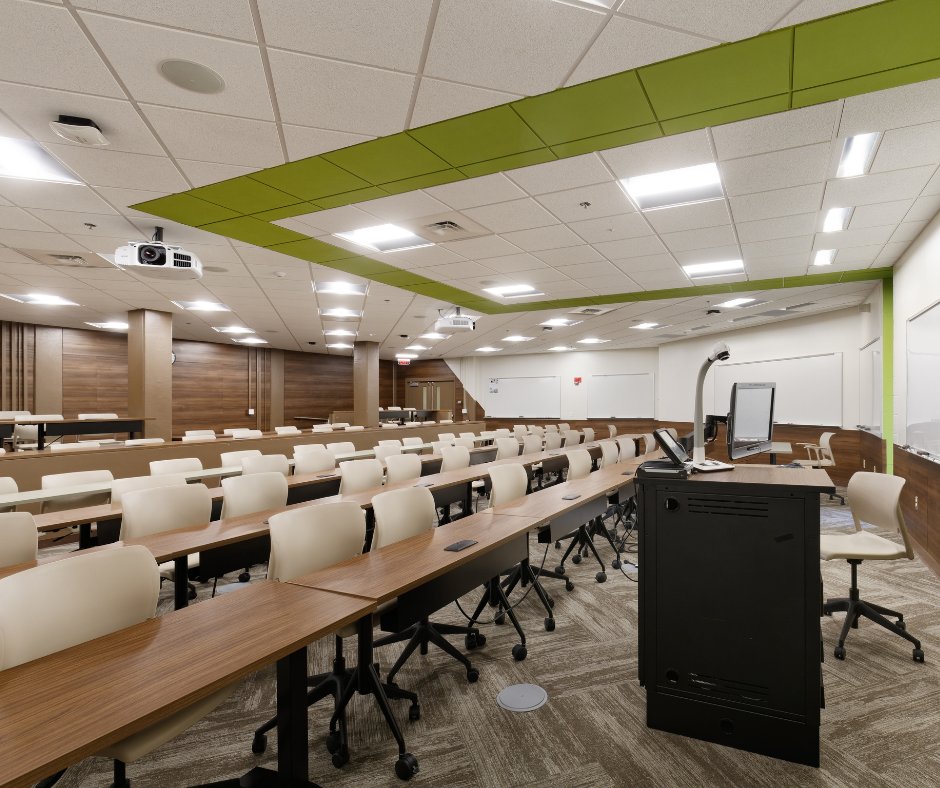
We build classrooms, laboratories, student housing, libraries, studios, gymnasiums and administration buildings for public and private education owners in the Santa Fe region and across northern New Mexico. Every school or college keeps a calendar, and the calendar is the real constraint. We schedule backward from the first day of class and tell you honestly what can be finished by then.
Education owners also tend to value craft. A studio for artists, a library or a student center is expected to last, and we build accordingly. Because campuses in this region are often built in the local idiom of stucco, deep openings and wood detail, we take care that new buildings sit comfortably beside old ones, and we offer mockups when a finish needs the facilities committee's eye.
Working Around the Academic Year
Summer is the productive window for occupied campuses, and it is short. We plan renovation work so that demolition, rough-in and long-lead procurement are done early, leaving the final weeks for finishes, testing and cleaning. Where a project cannot finish in one summer, we divide it into phases that each leave the building usable, with clear safety barriers between the work and the classrooms still in service.
On an active campus, we also think about students and staff as neighbors. Truck routes avoid pickup lanes and pedestrian paths, noisy tasks are kept away from testing hours, and fenced areas are signed in plain language. Our approach to phased construction on occupied sites applies fully to schools, and our education facility construction work follows the same discipline across new and renovated buildings.
Campuses and Districts in Our Market
The Community College District plan covers about 17,000 acres south of Santa Fe and was incorporated into Santa Fe County's Sustainable Land Development Code in 2016. It hosts the campuses of Santa Fe Community College and the Institute of American Indian Arts, and it shapes how roads, utilities and open space around them are laid out. Education owners there are working inside a plan that has shaped growth for years, and our Community College District page explains what that means for a builder.
Farther north, communities such as Espanola, Taos and Las Vegas depend on their schools and the university for steady employment. Education was named as the second-largest source of employment among Espanola residents, behind Los Alamos National Laboratory. Capital projects at these institutions are significant events for the whole town, and we treat them that way.
Procurement and Funding Rhythms
Public education projects follow public procurement rules. Contracts may be awarded through competitive bidding or other methods set by law, and funding often depends on budget cycles and approvals that set the schedule before design is complete. We help owners understand how delivery methods such as construction manager at risk or design-build can compress the schedule while keeping price transparent. Owners who also manage public buildings may find our work with government and public sector owners a useful comparison.
Because school and campus funding arrives in stages, we prefer to see a project phased so that each stage is usable by itself. A gymnasium, a classroom wing and a library may be funded separately, and the site should be ready for the next.
What We Build for Schools and Colleges
Classroom additions and renovations are the most common work, followed by science and art laboratories, performance and studio space, athletic buildings, dormitories and student unions. Mechanical systems are important in these buildings: classrooms need quiet, controlled air, and labs need exhaust and safety systems that are tested before occupancy. Our commissioning and closeout process tests those systems so they perform as designed on the first day of class, and so the facilities staff leave the handover meeting with manuals, warranties and training in hand.
For colleges with residential life, we also build housing, from small suites to larger communities. Our experience with multifamily developers carries over into student housing, where unit repetition, durability and quick turnaround between terms are essential, and where a corridor of identical rooms rewards a crew that has built them before. The education and school page describes our methods in more depth.
Keeping Students and Staff Safe
Safety on an active campus begins with separation. Construction areas are fenced and signed, material deliveries are scheduled away from arrival and dismissal times, and workers are briefed on the campus rules about conduct and visitor access. Where the school requires background checks for workers, we comply and keep the records.
Inside buildings, we maintain egress, protect fire alarm and sprinkler systems, and control dust and fumes near occupied classrooms. When a project affects a building with historical value, such as an older academic hall, we involve the campus facilities manager in decisions about finishes and details so that the character of the place survives the work.
Start the Summer Plan in the Fall
Share your campus, your building and the dates you cannot move. We will review phasing, procurement and long-lead items with you and give you a realistic path to opening day.
Questions Owners Ask
Can a classroom renovation really be finished over one summer?
Many can, if the planning begins early. The critical items are usually design approval, permit and the delivery of long-lead equipment such as air handlers and lab casework. We order those items as soon as the design allows, and we keep the final weeks free for finishes and commissioning. If a project is too large for one summer, we propose phases that each leave the building safe and usable.
How does public procurement affect the schedule for a school project?
Public owners must follow rules for advertising, bidding and award, and those steps add time. We help owners choose a delivery method that fits their funding and schedule, and we make sure estimates are updated as design progresses, so bids do not surprise anyone. Early involvement of a contractor, where the law allows, can reduce risk.
How do you build on a campus that is still in session?
We separate construction routes from student and visitor routes, limit noisy work to agreed hours and keep walkways clear and lighted. Regular meetings with campus operations staff keep the project informed about events, exams and move-in days. Most campuses have a few dates that cannot move, and we put those on our schedule first.
What about historic buildings on a campus?
Older buildings require careful condition surveys, hazardous material testing and early discussion with owners about preservation priorities. Changes visible from the outside may require review. We aim to retain character while meeting current accessibility, life safety and energy standards.